


Bristol is one of the UK’s most celebrated cities - rich in culture, packed with history, and brimming with creative energy. Its scenic harbourside, leafy suburbs and close‑knit communities make it an attractive option for families, professionals and students alike. But like any major urban area, safety varies significantly by neighbourhood, and knowing where crime is lower can make all the difference when choosing where to call home.
This guide breaks down the safest parts of Bristol - so you get a realistic picture of where you’re most likely to enjoy peace of mind - without hours of research.
Understanding Safety in Bristol
Bristol’s overall crime rate is noticeably higher than many other UK cities — recent figures from the Office of National Statistics (ONS) and local reporting suggest around 131.8 crimes per 1,000 residents for 2024/25, significantly above the national average.
That figure includes all recorded offences - from low‑level theft and anti‑social behaviour to violent crime, but it doesn’t tell the whole story. Crime in Bristol is highly uneven, with major differences between neighbourhoods. In fact, some wards see very low recorded crime rates, while others (particularly central and high‑density urban areas) record much higher number.
By Brook
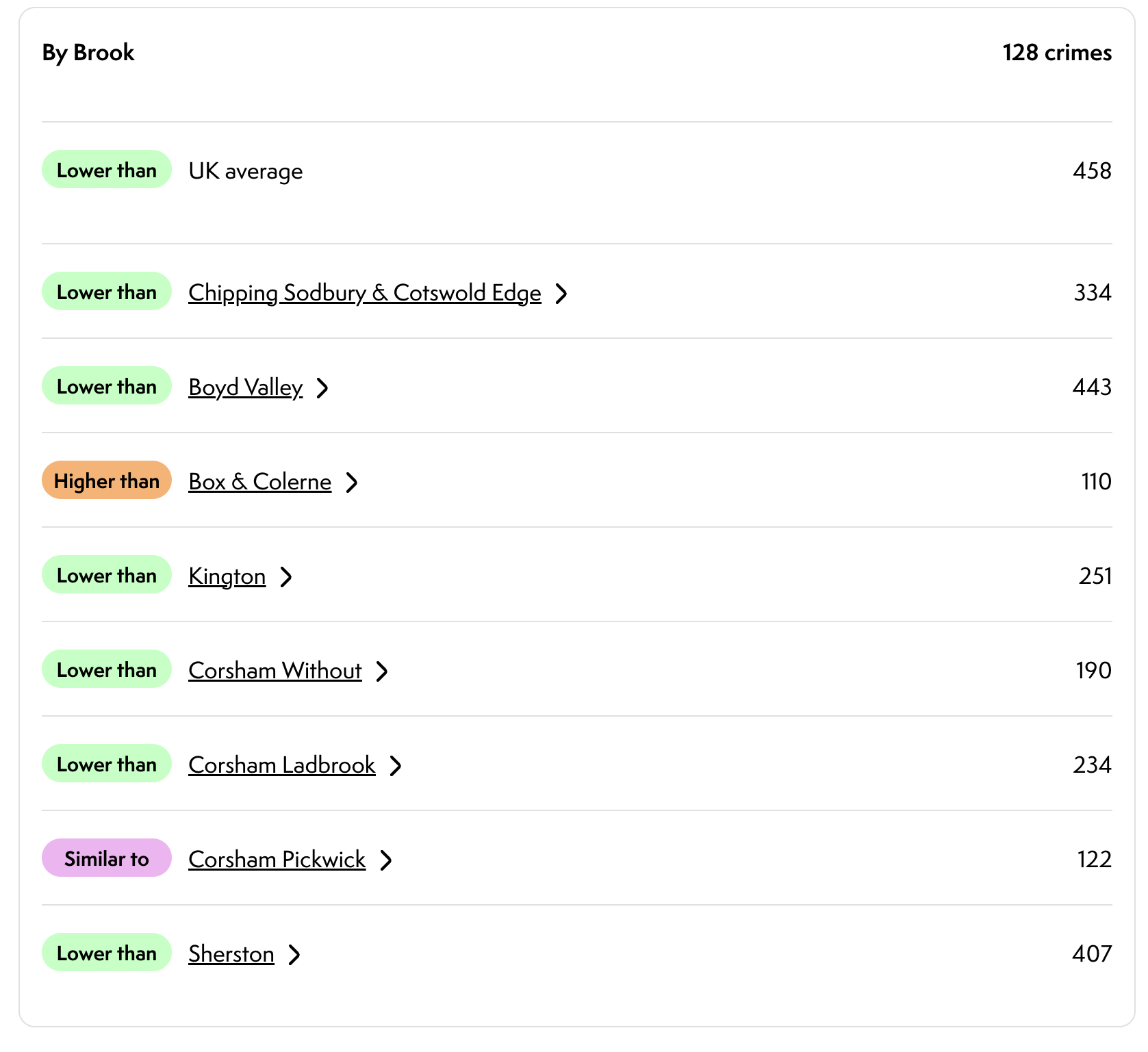
By Brook maintains notably low crime levels, with rates consistently less than half the UK average and among the lowest in the surrounding area.
The neighbourhood recorded 274 crimes in 2024, averaging 23 incidents per month compared to the national average of 54. This places By Brook well below typical UK crime rates and significantly lower than most neighbouring areas. Crime levels have remained stable over the past two years, showing the area maintains its safe character consistently.
The 2025 data through December shows the neighbourhood continuing this positive trend. By Brook compares favourably to surrounding areas, with only Box & Colerne recording similarly low figures. This sustained pattern suggests a settled, secure community where residents can feel confident about safety.
Publow & Whitchurch
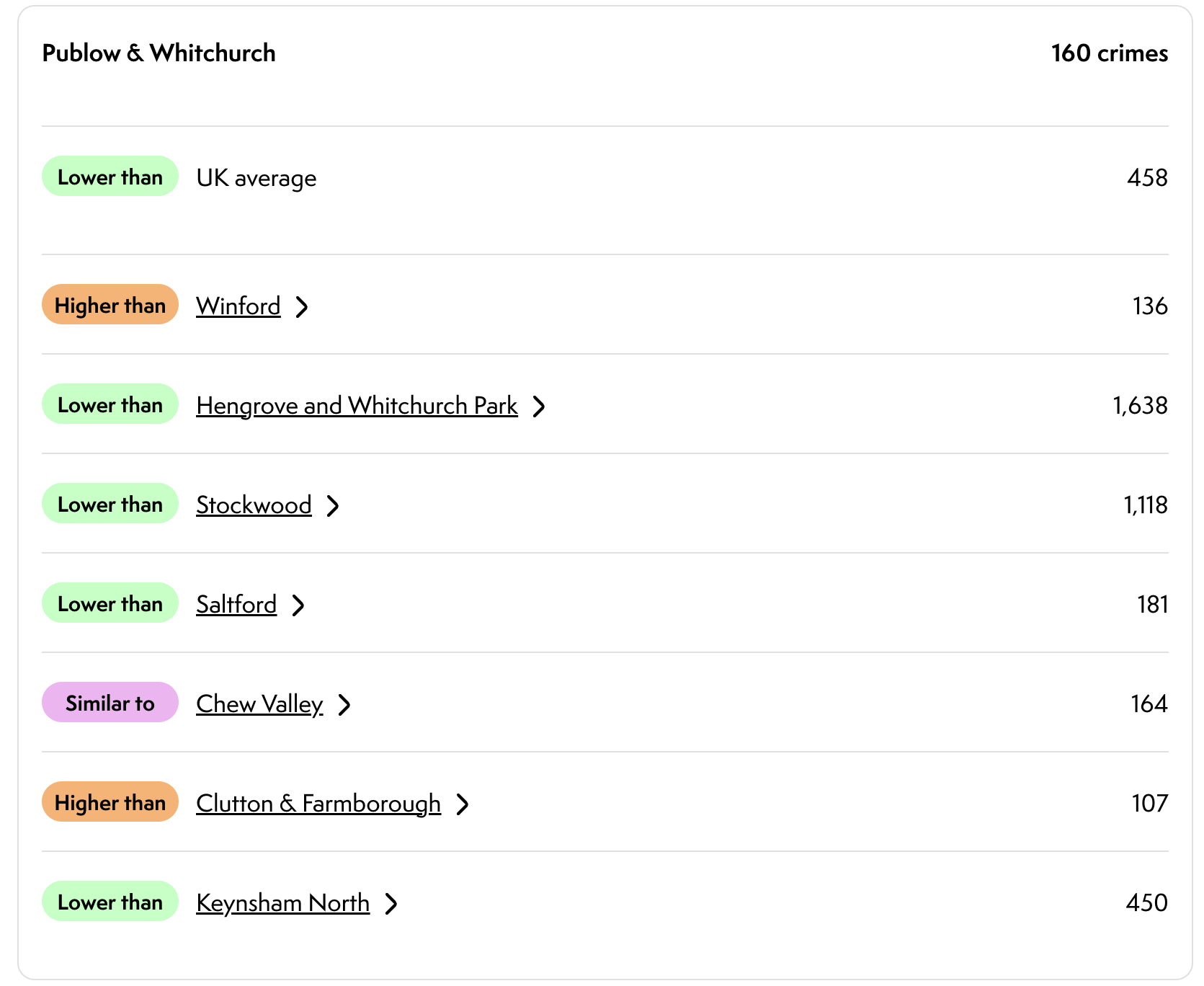
Publow & Whitchurch maintains crime levels well below the UK average, with around 24 incidents per month in 2024 compared to the national average of 54, making it a notably safe neighbourhood for families and homebuyers.
The area consistently records less than half the crime rate of a typical UK neighbourhood. In 2023, there were 245 incidents across the year, rising slightly to 289 in 2024, but this remains significantly lower than national figures. The neighbourhood compares favourably to surrounding areas too, with similar low crime levels to rural Chew Valley and Clutton & Farmborough.
Crime rates here reflect the character of a quiet, semi-rural community where residents enjoy a strong sense of security. The figures suggest an active, well-established neighbourhood where people feel comfortable and look out for one another, making it an appealing choice for those seeking a peaceful environment close to both Bath and Bristol.
Bitton & Oldland Common
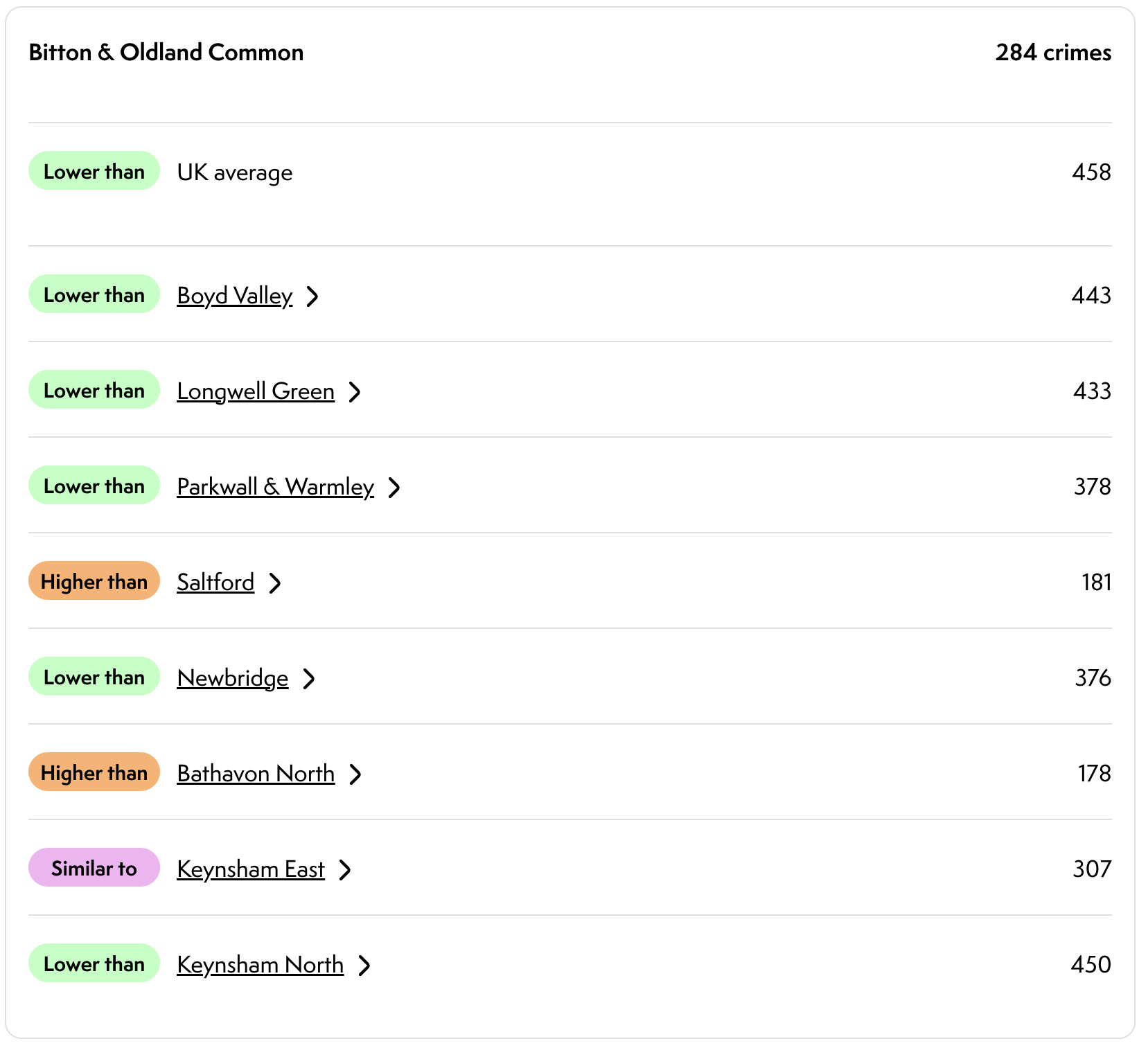
Bitton & Oldland Common consistently records crime levels well below the UK average, with around 36 incidents per month compared to the national figure of 54, making it one of the safer neighbourhoods in the South Gloucestershire area.
The neighbourhood has maintained stable crime rates over the past three years, with 438 incidents in 2023 and 436 in 2024. This consistency suggests a settled community with effective local policing. Crime levels remain notably lower than most surrounding areas — neighbouring Keynsham North and Boyd Valley both record significantly higher figures.
The area compares favourably to the national picture, with crime rates roughly a third below the UK average. This reflects the neighbourhood's semi-rural character and strong community presence. While no area is entirely crime-free, Bitton & Oldland Common's track record demonstrates it's a reliably safe place to live.
Long Ashton
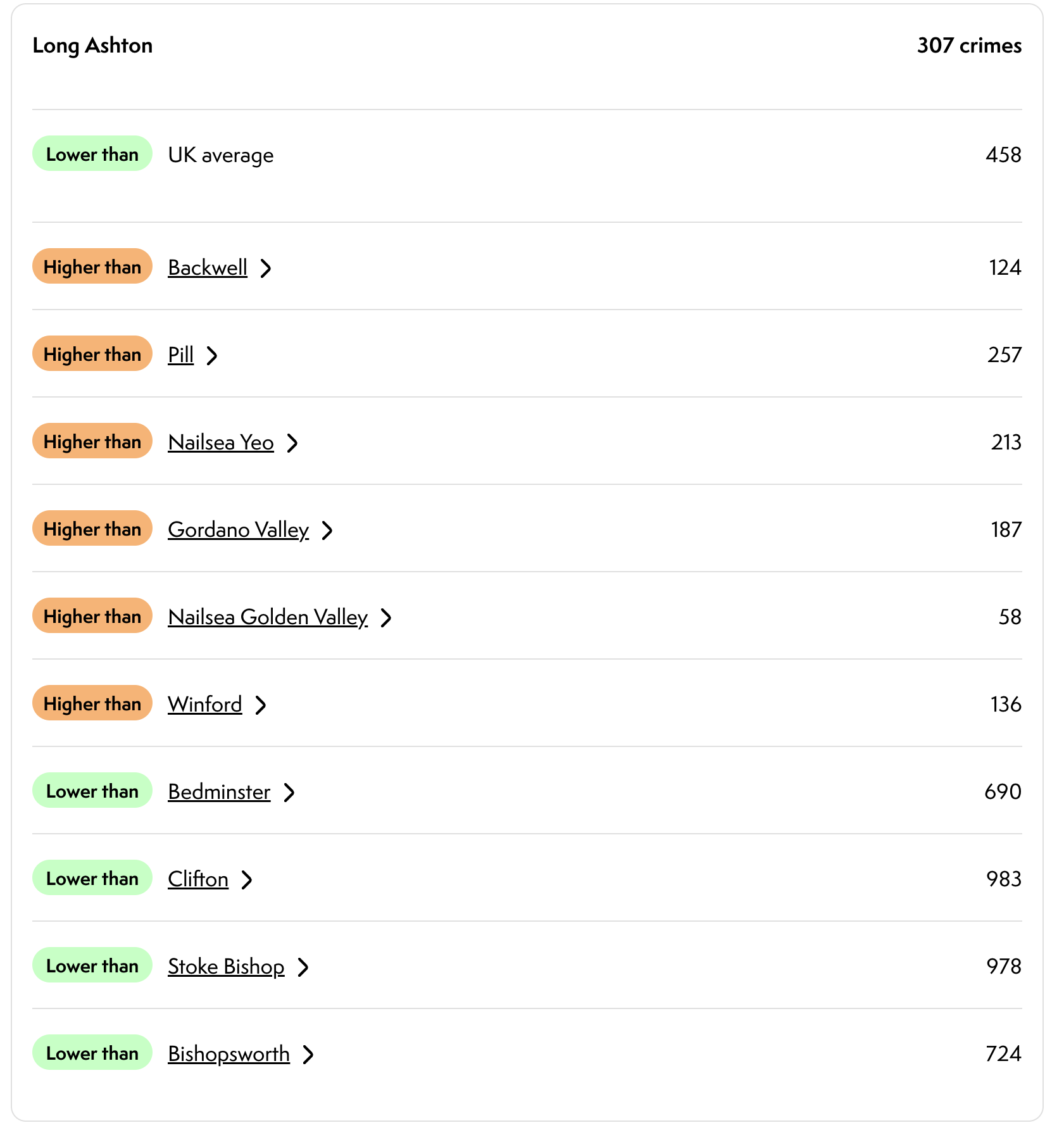
Long Ashton maintains crime levels well below the national average, with around 26 to 38 incidents per month compared to the UK average of 38 to 55, making it a relatively safe and settled community.
Crime rates here are consistently lower than typical UK neighbourhoods, running about 30% below national figures. The area saw a slight increase in 2024 but has returned to more moderate levels in 2025, suggesting normal fluctuations rather than any concerning trend.
Long Ashton compares favourably to surrounding areas, with crime levels similar to other quieter neighbourhoods like Backwell and Winford, and notably lower than nearby urban areas. The community benefits from its village character whilst remaining accessible to Bristol, offering a balance of peaceful residential living with good local engagement.
Parkwall & Warmley
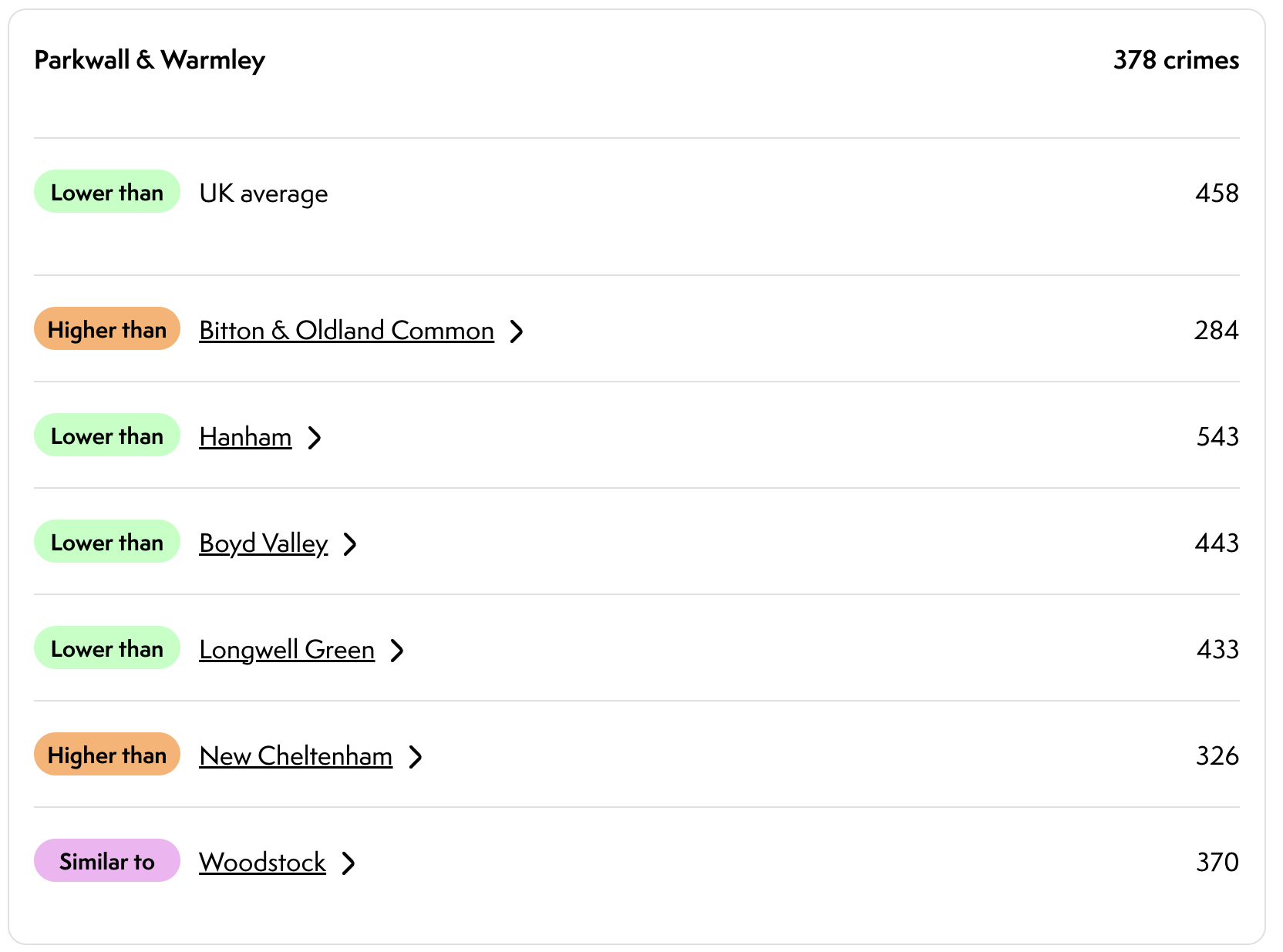
Parkwall & Warmley shows crime levels consistently below the UK average, with recent figures indicating around 32 incidents per month compared to the national average of 38. The neighbourhood has maintained steady crime rates over the past three years, sitting in the middle range compared to surrounding areas. Crime levels here are lower than busier neighbouring areas like Hanham and Boyd Valley, whilst remaining comparable to quieter spots like Woodstock and New Cheltenham.
The data suggests this is a stable residential community with no concerning upward trends. You'll find crime rates here are roughly 20% below the national average, which reflects well on the area's overall safety profile.
Conclusion
Bristol is a city full of character, energy, and opportunity - from its historic harbourside and thriving cultural scene to its leafy suburbs and close-knit communities. But like any major city, safety varies widely depending on where you live. While some central districts naturally record higher crime due to nightlife, footfall, and transport hubs, many neighbourhoods consistently offer lower crime levels, quiet streets, and a real sense of community. Areas such as St George & Troopers Hill, Redland, Bishopston, Clifton, Clifton Down, and Cotham stand out as places where residents can enjoy peace of mind while still being connected to everything Bristol has to offer.
Navigating crime data across multiple sources, reports, and shifting local trends can quickly become overwhelming and that’s exactly where Planna comes in. We do the hard work for you, analysing detailed crime patterns, tracking neighbourhood trends and turning complex data into clear, actionable insights. You can see which areas are consistently low-crime, where community networks are strong, and which streets offer calm and security - all without spending hours poring over spreadsheets or council reports.