


London is one of the world’s most dynamic and exciting cities. But like any major urban centre, quality of life and personal safety, depends greatly on where you live. From the buzzing markets of Camden to the serene riverside parks of Richmond, London offers an unmatched blend of excitement and charm.
But with all that energy comes a reality: life in the capital can vary dramatically depending on where you choose to call home. For those seeking not just a place to live but a neighbourhood that feels safe, welcoming, and full of life - understanding the true crime landscape is essential. Whether you’re relocating for work, study, family or simply to experience city living, knowing which corners of London are safer can help you make a confident and informed choice.
Understanding London’s Crime Landscape
Before we talk about the safest areas, it’s important to get a big‑picture view of crime in London:
Crime in London vs. the Rest of the UK
London’s crime rate is generally higher than the national average - but this partly reflects its population density, transport hubs and tourism:
- Some data suggests the overall crime rate in London is around 104 crimes per 1,000 people, compared to a national average lower than that. eufy
- In the busiest areas like Westminster, crime rates can soar above 350 crimes per 1,000 residents — a figure driven in large part by theft and tourist‑targeted offences. eufy+1
What Counts As Crime?
Crime statistics include a wide range of offences, for example:
- Theft and burglary
- Violence against a person
- Vehicle crime
- Anti‑social behaviour
- Sexual offences
- Drug offences and public order
Higher crime stats don’t always mean violent or dangerous crime. Often they reflect high volumes of theft or petty offences in busy areas.
Daytime vs Night-time Experiences
Many crimes reported in central London relate to transit zones, busy commercial streets or major transport hubs - places that have thousands of daily visitors. These figures don’t necessarily reflect what it’s like living on a residential street late at night.
The Safest Places In London
When it comes to safety in London, a few boroughs consistently stand out. Sutton, Kingston upon Thames, and Richmond upon Thames top the list, and for good reason. These areas share a mix of calm residential streets, leafy parks, and a true sense of community that makes them feel like a world away from the busy, chaotic streets of central London.
Bassishaw
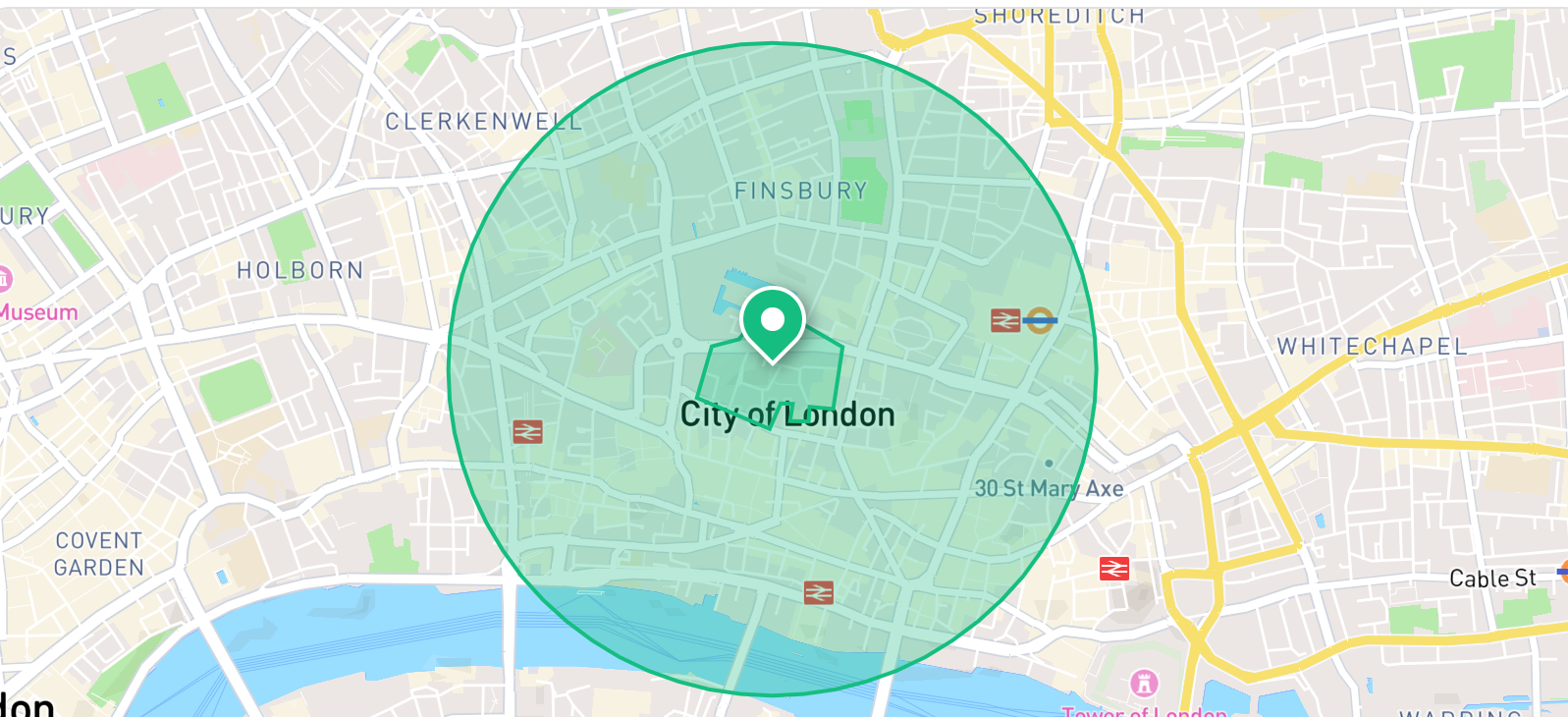
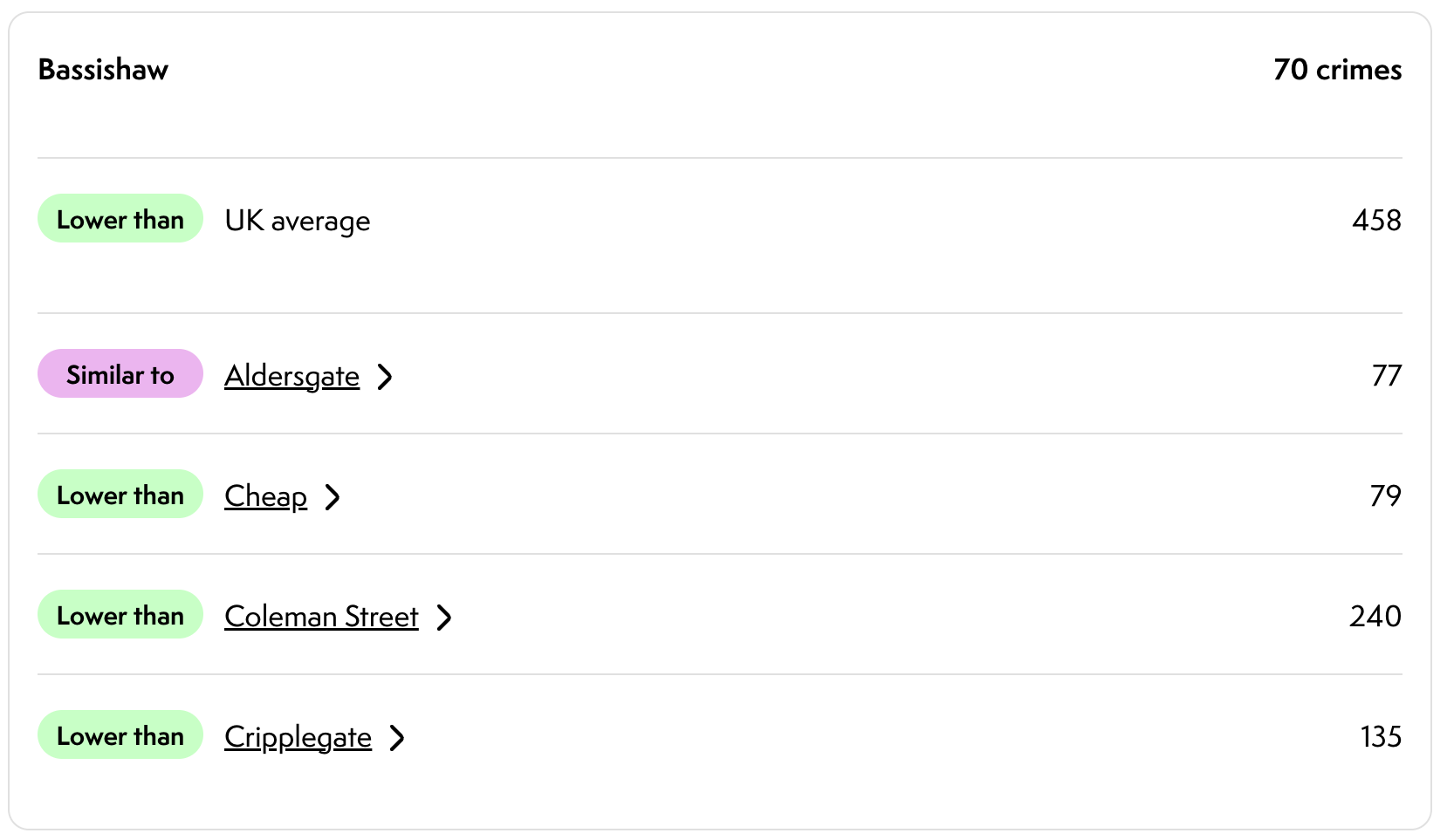
Bassishaw records significantly lower crime levels than the UK average, with around 14 incidents per month compared to the national figure of 54, making it one of the safer neighbourhoods in the City of London.
Crime rates have remained consistently low over the past three years, with 154 incidents in 2023 and 164 in 2024. The neighbourhood compares favourably to surrounding areas, recording fewer crimes than nearby Coleman Street and similar levels to Aldersgate and Cheap.
As a primarily commercial district in the City of London, Bassishaw benefits from extensive security measures and a visible professional presence during working hours. The low crime figures reflect the area's well-managed environment and active community of businesses and residents working together to maintain safety standards.
Aldersgate
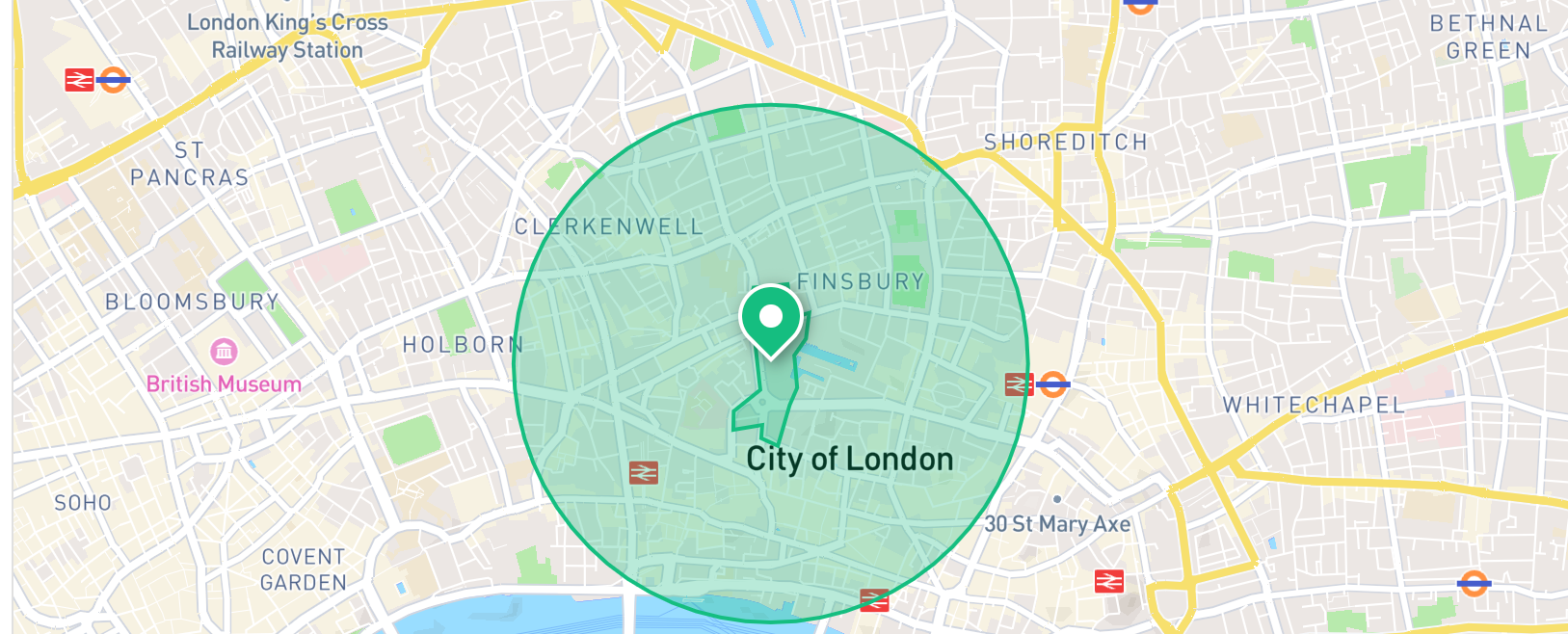
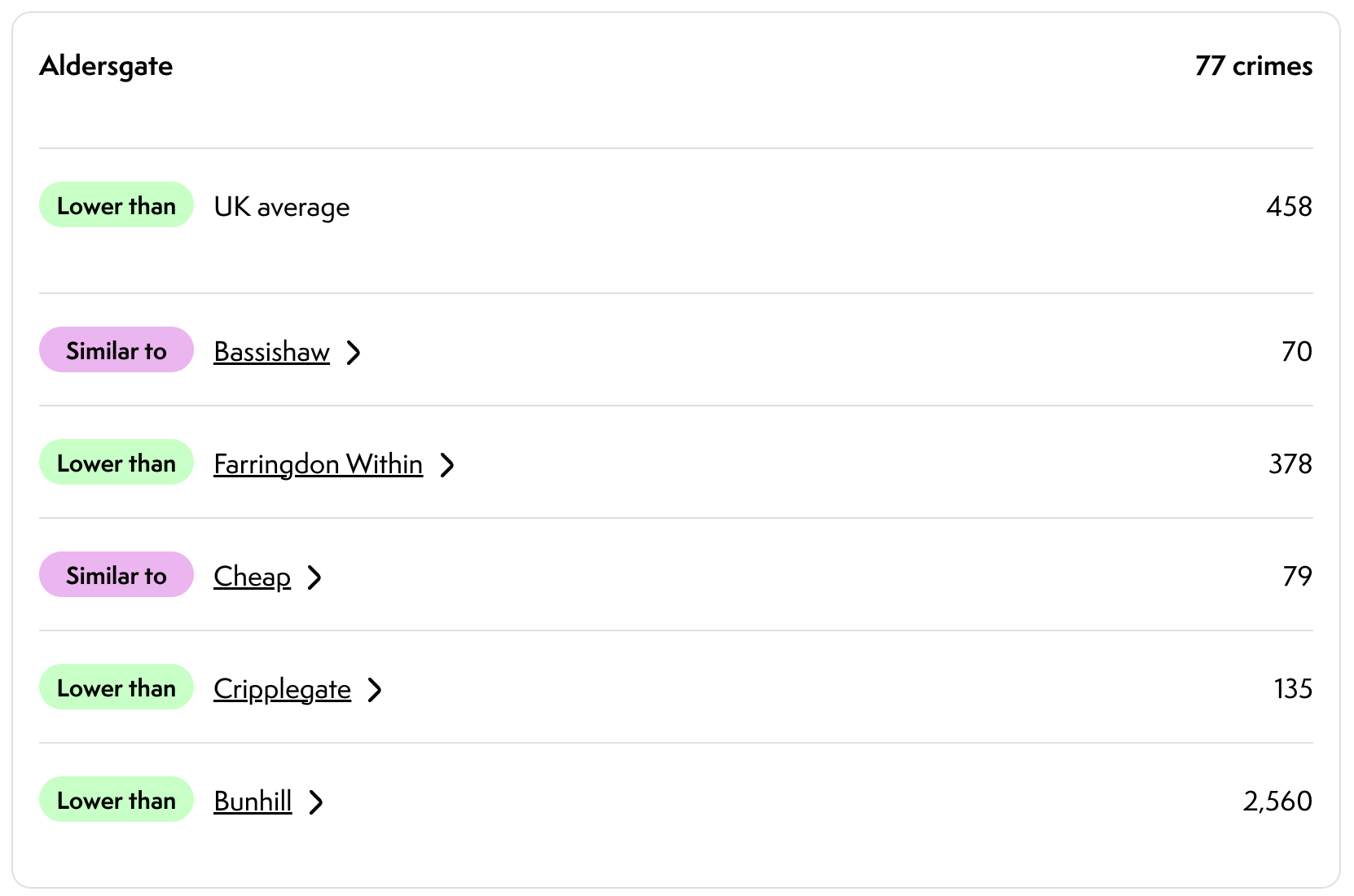
Aldersgate maintains notably low crime levels, with rates consistently well below the UK average and showing steady improvement over the past three years.
The neighbourhood recorded 110 crimes in 2024, averaging just 9 incidents per month — significantly lower than the UK average of 54 crimes per month. This positive trend has continued into 2025, with crime falling further to around 6 incidents per month.
Aldersgate compares favourably to surrounding areas, with crime levels similar to neighbouring Bassishaw and Cheap, whilst being considerably lower than busier commercial districts nearby. The consistent year-on-year reduction demonstrates effective community safety measures and reflects the area's residential character within the City of London.
Billingsgate
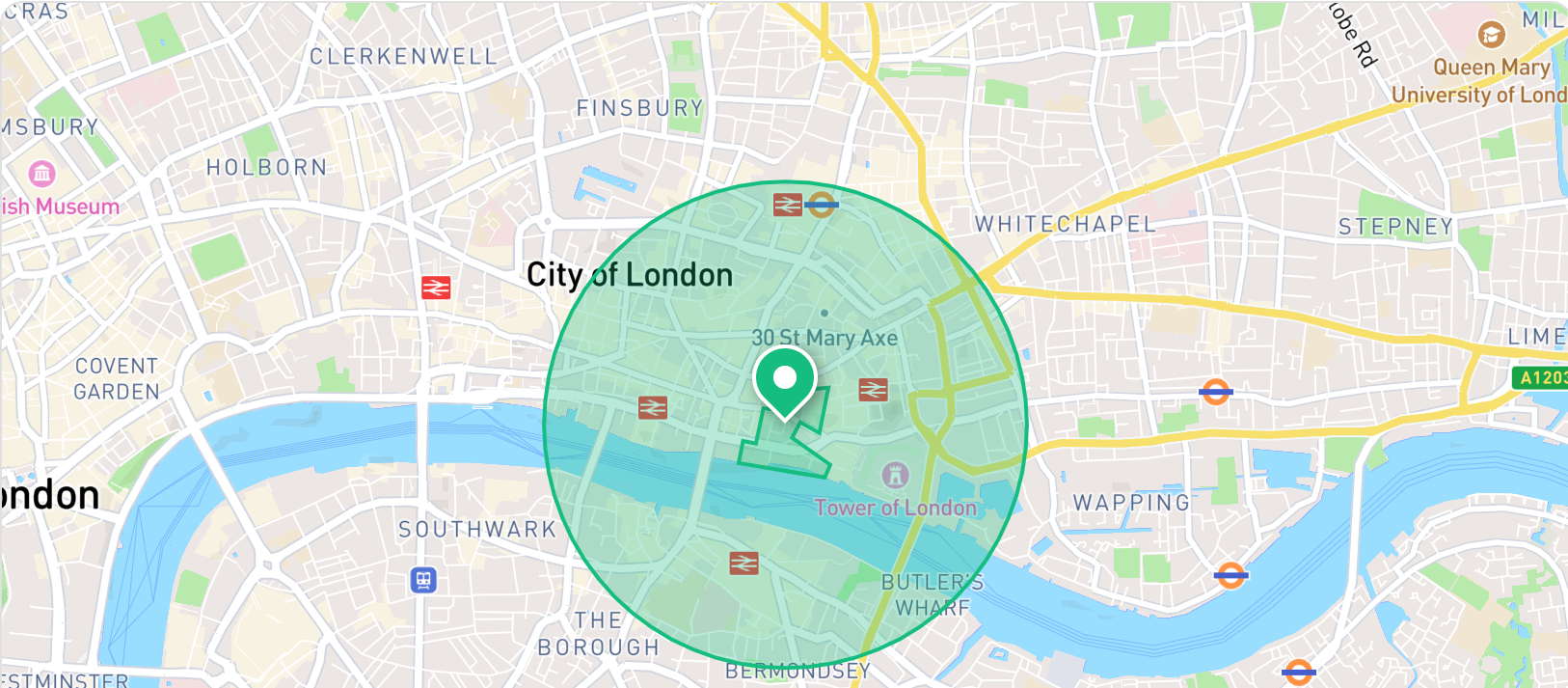
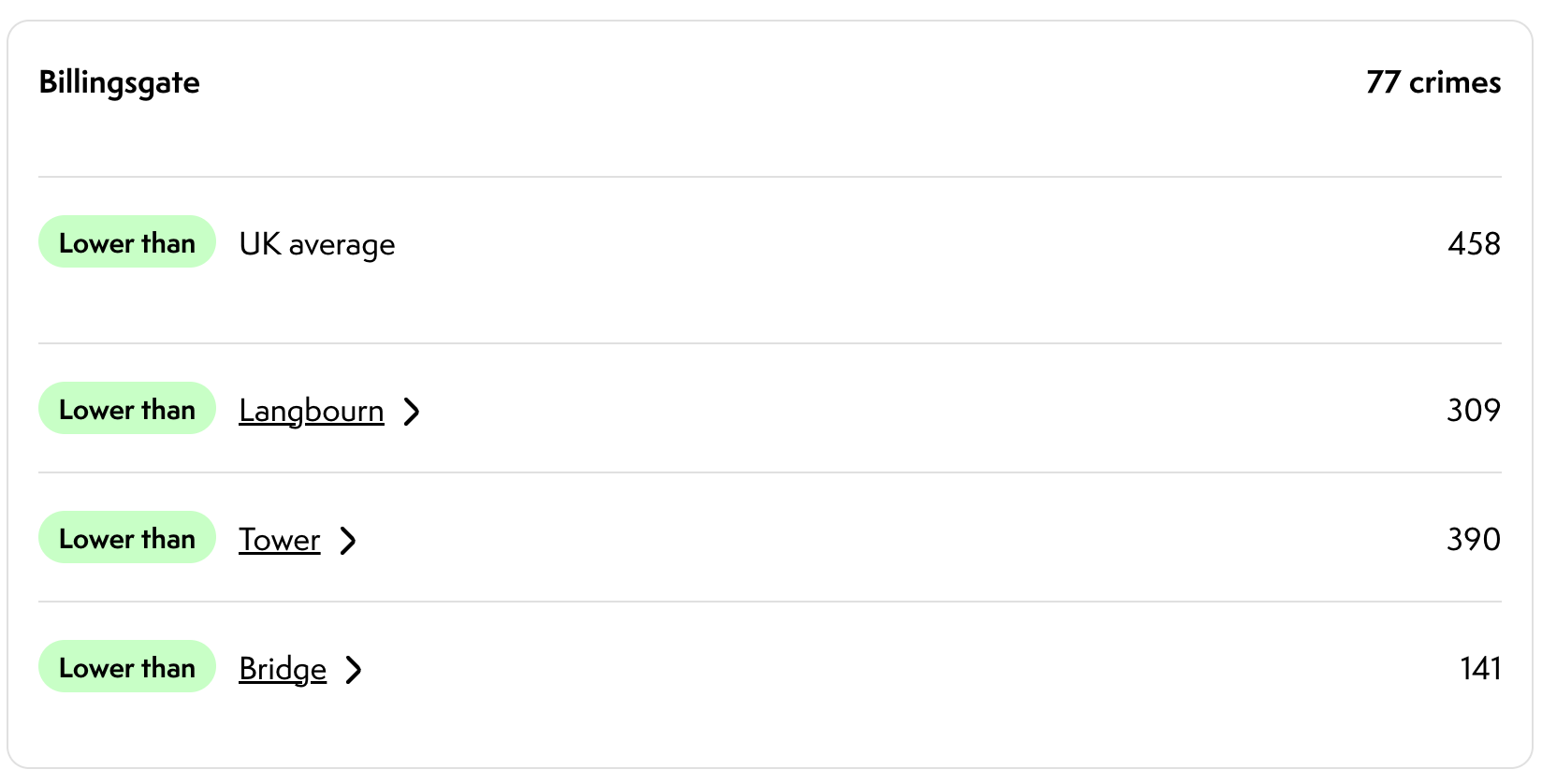
Billingsgate consistently records crime levels well below the UK average, with around 13 incidents per month in recent years — roughly a quarter of the national figure. The neighbourhood has maintained stable crime rates between 2023 and 2024, and early 2025 data suggests this trend continues.
Compared to surrounding areas like Tower and Langbourn, which see significantly higher crime volumes, Billingsgate stands out as notably quieter. This reflects its character as a primarily commercial district within the City of London, where dedicated policing and active community management help maintain a secure environment. The low and steady crime figures demonstrate this is an established, well-monitored area where safety remains a consistent priority.
The Conclusion
Keeping track of safety across every London borough can feel like a full-time job. Between sifting through crime statistics, checking local reports and trying to make sense of neighbourhood trends, it’s easy to feel overwhelmed. That’s where Planna steps in. We do the heavy lifting for you, taking complex and often confusing data and transforming it into clear, actionable insights. From analysing crime patterns to spotting emerging trends in specific area's or communities, we give you a detailed picture of safety - without you having to spend hours digging through spreadsheets or council reports.
Whether you’re buying your first home, renting for the long term, or just exploring potential areas, Planna gives you confidence and clarity. You can see exactly which neighbourhoods feel safe, which areas have strong community networks, and which streets are quiet and well-policed. In a city as vast and fast-moving as London, having that kind of insight is invaluable. With Planna doing the research for you, you can focus on the exciting part of moving or investing - finding a home that fits your lifestyle, while leaving the safety analysis to the experts