



Leeds is one of Yorkshire's most dynamic cities — a thriving hub of culture, and community, with neighbourhoods that range from leafy suburban retreats to bustling urban centres. Whether you're drawn by the food scene, the universities, the green spaces, or simply the energy of a city that's genuinely on the up, Leeds has a lot to offer. But like any major city, crime levels vary considerably from one area to the next. Knowing where to look can save you hours of research and help you make a more confident decision about where to put down roots.
This guide breaks down the safest parts of Leeds using our Neighborhood Guide — so you get a clear, realistic picture of where you're most likely to enjoy peace of mind, without spending hours trawling through police reports and council data.
Understanding Safety in Leeds
Leeds is a large and diverse city, and its crime figures reflect that. Like many major UK urban centres, overall recorded crime rates are higher than the national average, but that headline number masks enormous variation between neighbourhoods. Some parts of Leeds record crime levels far below the UK average, while central and high-density areas naturally see higher figures due to footfall, nightlife, and transport hubs. The city centre, student-heavy areas, and major retail corridors will always attract more recorded incidents simply by virtue of how many people pass through them each day.
Harewood
Harewood stands out as one of the safest neighborhoods in the Leeds area, with just 990 crimes recorded across 2025 — averaging around 83 incidents per month.
Harewood is a sprawling rural ward covering a wide geographic area, and its population density is low. The figures reflect the character of a quiet, semi-rural neighbourhood where residents enjoy a strong sense of security and community.
This rural setting shapes the crime profile significantly — there's simply less of the footfall, late-night activity, and opportunistic theft that drives up figures in more urban areas. For those seeking a peaceful base within reach of the city, Harewood consistently delivers, and its crime figures have remained stable rather than creeping upward over time.

Garforth and Swillington
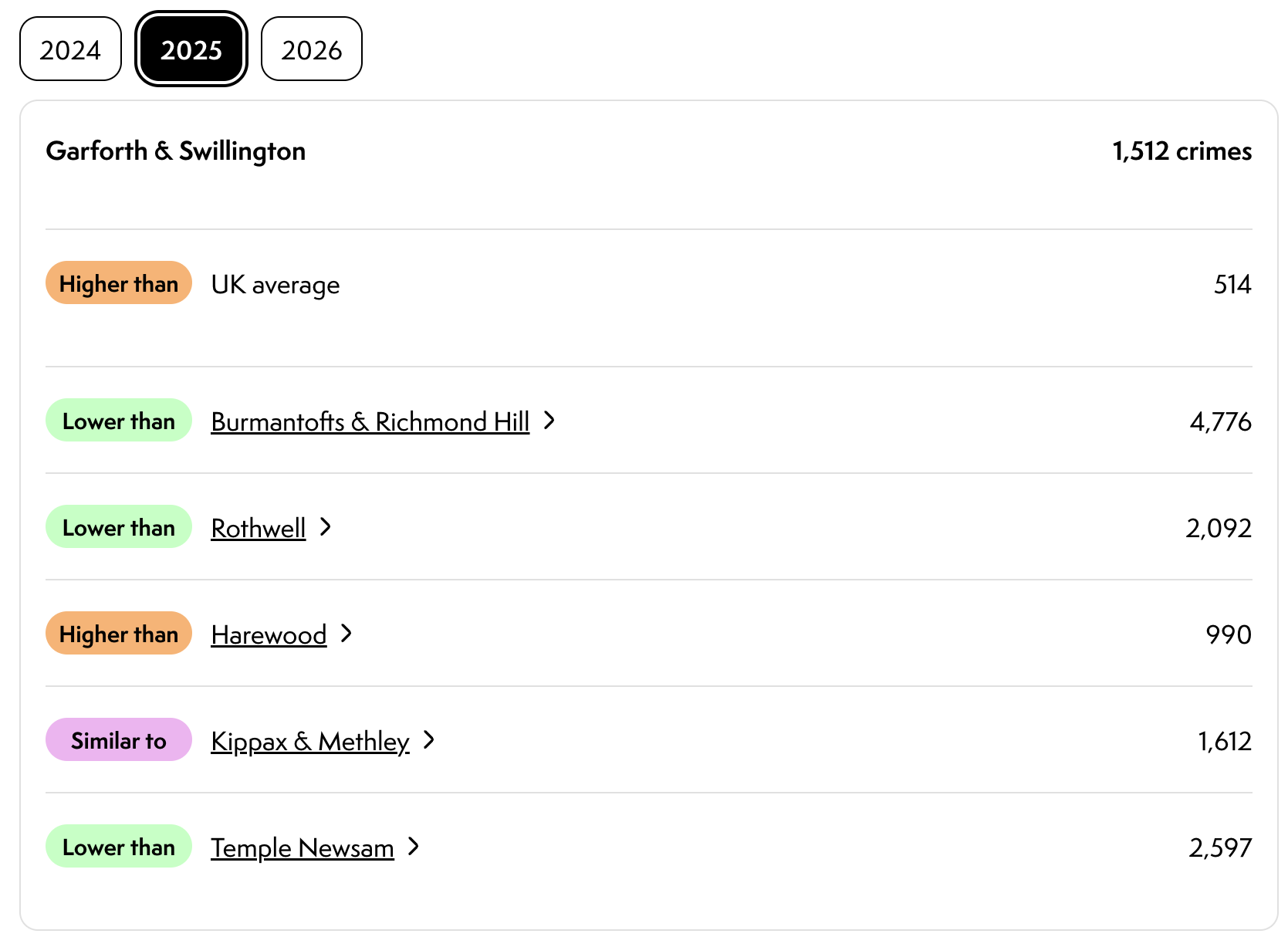
Garforth and Swillington recorded 1,512 crimes in 2025, averaging around 126 incidents per month.
The neighbourhood has a settled, established feel, with the kind of close-knit community networks that tend to keep crime rates stable over time. Garforth in particular has long been popular with families and young professionals and the crime data supports its reputation as a safe and liveable place. The figures here are notably lower than busier Leeds districts, making it a strong option for buyers prioritising security alongside good transport links.
Garforth benefits from excellent rail connections into Leeds city centre and good access to the M1, making it a practical as well as pleasant place to live. The local high street, parks, and schools give it a genuine community feel that goes beyond the numbers.
Alwoodley
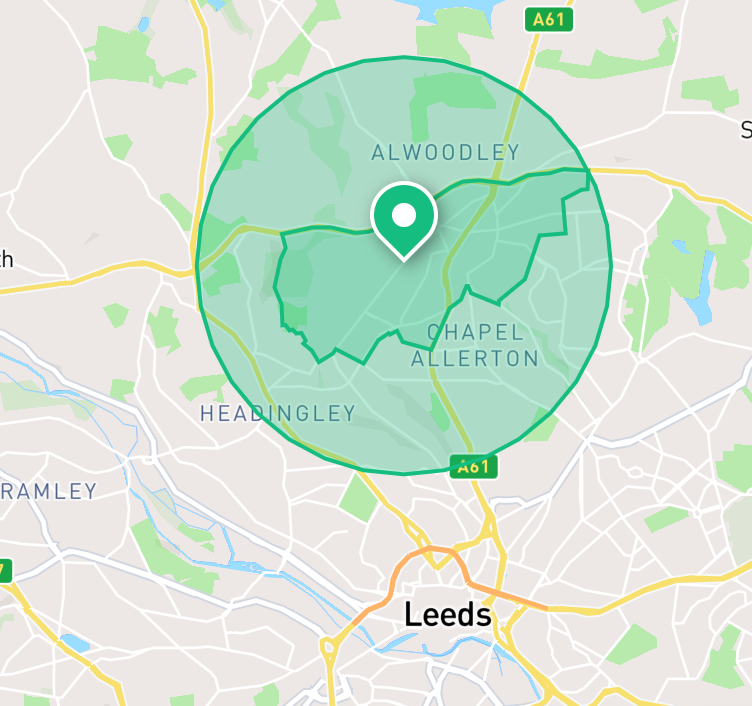
Alwoodley recorded 1,559 crimes in 2025, averaging roughly 130 incidents per month - placing it among the more consistently safe residential neighbourhoods in north Leeds.
Long regarded as one of Leeds's most desirable suburbs, Alwoodley's reputation is backed up by the data. The area benefits from good community cohesion, a predominantly residential character, and relatively low footfall from transient visitors - all factors associated with lower crime rates.
Adel and Wharfedale
Adel and Wharfedale recorded 1,588 crimes across 2025, averaging around 132 incidents per month, a stable and relatively low figure for a ward of its size and location.
The area sits in the northern reaches of Leeds, bordered by open countryside and the Wharfe Valley, giving it a village-like atmosphere that's reflected in its crime profile. Residents tend to enjoy a high quality of life here, with green spaces, strong schools, and a tight community feel. Crime levels have remained consistent, suggesting a settled neighbourhood rather than one experiencing any concerning upward trend.
Moortown
Moortown recorded 1,664 crimes in 2025, averaging around 139 incidents per month - still below the levels seen in many inner-city Leeds neighbourhoods, and broadly comparable to other popular north Leeds suburbs.
Moortown is a well-established residential area with a strong local identity, good amenities, and a diverse, active community. While it records slightly more crime than some of the other neighbourhoods on this list, it remains a stable and appealing place to live. The figures here reflect the slightly busier, more suburban nature of the area rather than any particular safety concern, and Moortown continues to attract families and professionals looking for a well-connected base in north Leeds.
Conclusion
Leeds is a city of real contrasts — from its vibrant city centre and regenerated South Bank to the quiet green fringes of the Wharfe Valley — and its crime landscape reflects that diversity. While some districts naturally record higher figures due to nightlife, density, and footfall, the neighbourhoods covered in this guide tell a different story. Harewood, Garforth and Swillington, Alwoodley, Adel and Wharfedale, and Moortown all consistently offer lower crime rates, settled communities, and a genuine sense of security - making them some of the most appealing places to buy in the wider Leeds area.
Of course, crime data is just one piece of the puzzle when choosing where to live. Schools, transport links, green space, local amenities, and the overall feel of a street all matter too. But safety is often the foundation — and in these neighbourhoods, the foundations are solid.
Making sense of crime data across multiple sources and shifting local trends takes time and that's exactly where Planna comes in. We do the hard work for you, analysing detailed crime patterns, tracking neighbourhood trends, and turning complex data into clear, actionable insights. You can see which areas are consistently low-crime, where community networks are strong, and which streets offer calm and security — all without spending hours poring over spreadsheets or police reports.