



Why Energy Costs Belong in Every Property Decision
When most people picture the cost of a home, they picture the big, obvious numbers: the asking price, the deposit, the monthly mortgage payment. Those figures dominate the conversation, and understandably so. But there is another number that quietly shapes the affordability of a property for years after the sale completes, and it rarely gets the same attention during the search. That number is the energy bill.
With the energy price cap moving again this autumn, it is worth pausing on just how large a running cost energy has become, and why the fabric of the home you choose matters just as much as the price you pay for it. At Planna, we think about homes as systems, not just addresses, and energy is one of the clearest examples of a cost that is decided long before you ever open a supplier's app.
Where the price cap sits right now
For the period from 1 July to 30 September 2026, the energy price cap for a typical dual-fuel household paying by direct debit sits at £1,663 a year. From 1 October to 31 December 2026, it rises by 4% to £1,723. That increase is modest compared with the dramatic swings of recent years, but it lands on top of a level that already feels high to most households, and it is a useful reminder that the cap is a ceiling on unit rates, not a cap on your actual bill.
This is the point that trips people up most often. The price cap is frequently reported as though it were a fixed annual charge, but it is nothing of the sort. It limits what suppliers can charge per unit of energy and per day in standing charges. What you actually pay depends on how much energy your home uses, and that, in turn, depends heavily on the building itself.
Breaking the cap down into its components makes the mechanics clearer. Under the current cap, electricity costs around 26.11p per kWh with a daily standing charge of 57.19p, while gas costs around 7.33p per kWh. The "typical" household the headline figure is based on is assumed to use roughly 9,500 kWh of gas and 2,500 kWh of electricity a year. If your home uses more than that, whether because it is larger, older, poorly insulated, or simply home to more people, your bill climbs above the headline number. If it uses less, you pay less. The cap is the rate card; the property decides the quantity.
The standing charge is worth calling out separately, because it behaves differently from everything else. At 57.19p a day for electricity alone, it is charged simply for being connected to the grid, whether you use a single kilowatt-hour or none at all. Over a year that daily charge adds more than £200 to the electricity bill before a single appliance is switched on, and there is no efficiency measure or careful habit that reduces it. It is a reminder that a meaningful chunk of the energy bill is fixed the moment you take on a property, and only the tariff you choose and the supplier you are with can move it.
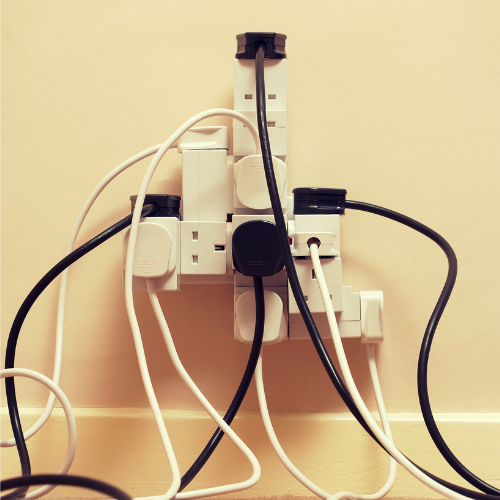
The house is the variable nobody prices in
Here is where a property lens changes the picture entirely. Two homes on the same street, bought for a similar price, can produce wildly different energy bills. A well-insulated, draught-proofed house with an efficient boiler and modern glazing might sit comfortably below the typical consumption figures. A period property with single glazing, an aging heating system, and gaps around every door and window can burn through gas at a rate that pushes the annual bill hundreds of pounds higher, year after year.
That gap does not show up on the estate agent's listing in any meaningful way. The EPC rating is there, tucked at the bottom of the particulars, but it is often treated as a formality rather than a forecast of real running costs. Yet over the length of a typical mortgage, the difference between an efficient home and an inefficient one can add up to a five-figure sum. It is one of the largest hidden costs in the entire home-buying process, and it is almost entirely determined at the point of purchase.
This is exactly the kind of insight we believe should sit at the front of a property decision rather than the back. Buyers spend weeks agonising over whether an asking price is £5,000 too high, then move into a home whose energy inefficiency will quietly cost them more than that over the years they live there. Understanding the building's energy profile before you commit is not a nice-to-have; it is part of understanding what you are actually buying.
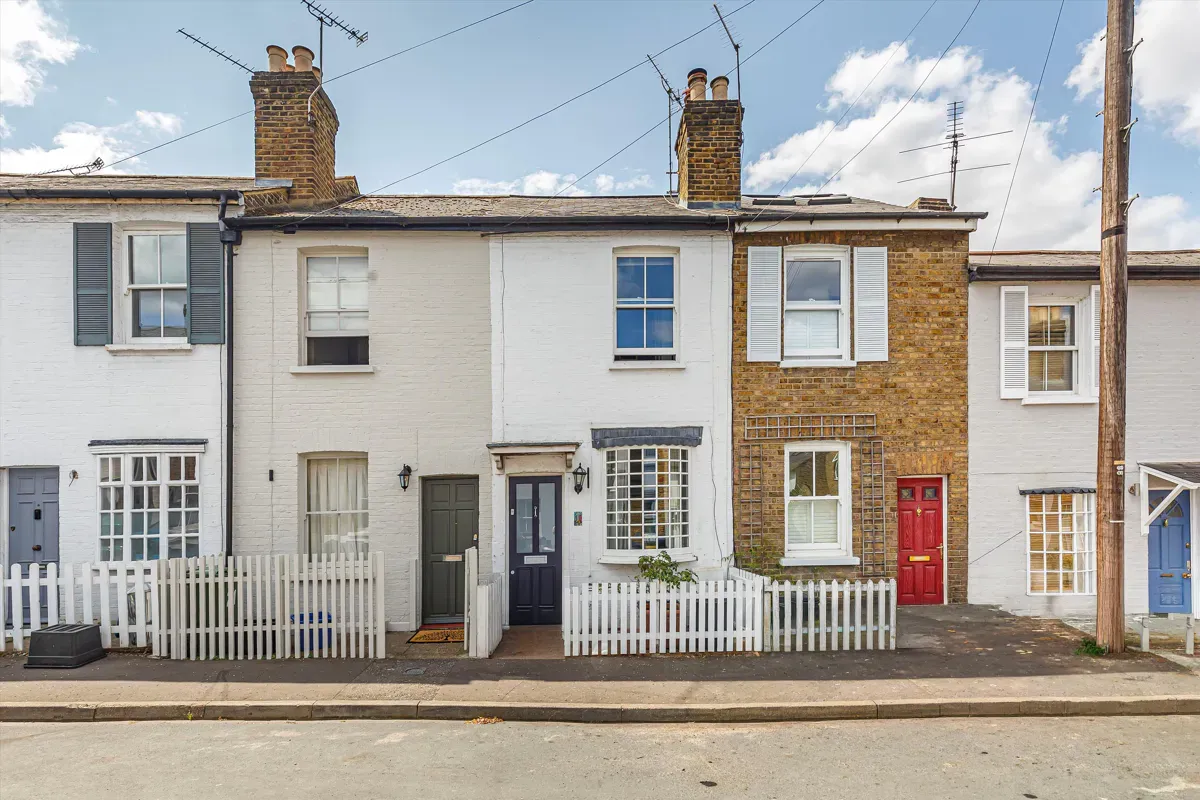
Two in three households are paying more than they need to
Even once you are in the home, there is a second, more immediate cost that many people carry without realising it. According to Ofgem figures from April 2025, around 65% of households are on standard variable tariffs. These are the default tariffs your supplier moves you onto when a fixed deal ends, and they track the price cap up and down. For a long stretch of the recent energy crisis, staying on a variable tariff was genuinely the safest option, because fixed deals were either unavailable or priced above the cap. That has changed.
With the market steadier, fixed-rate deals have returned, and they can now undercut the cap. Analysis of switchers suggests households can save up to £382 a year by moving to a fixed-rate deal rather than sitting on a standard variable tariff. That is a meaningful sum: close to the entire 4% cap increase coming in October, recovered simply by choosing a better tariff. The fact that roughly two in three households have not made that move tells you how much inertia there is in the system, and how much money is left on the table as a result.
The choice between tariff types comes down to what you value. A fixed-rate deal locks in your unit prices, typically for 12 to 24 months, giving you certainty and protecting you from further cap rises. The trade-off is that some fixed deals carry exit fees if you leave early, and if the cap were to fall below your fixed rate, you would be paying more than the market. A standard variable tariff moves with the cap, so you benefit immediately when prices fall but you are equally exposed when they rise. For most households prioritising predictability, particularly ones that have just taken on a mortgage and want stable outgoings, a competitively priced fixed deal is worth serious consideration.
Switching is easier and safer than most people assume
Part of the reason so many households drift on default tariffs is a lingering belief that switching is risky or disruptive. In practice, the process is quick and well protected. A switch should complete within five working days, and there is a 14-day cooling-off period during which you can change your mind. If a switch is delayed beyond the agreed timeframe, you are entitled to £40 in compensation, with a further £40 if that payment is not made within ten days. Your supply does not get interrupted, no engineer needs to visit, and the same gas and electricity continue to flow into your home. What changes is the company that bills you and the rate you pay.
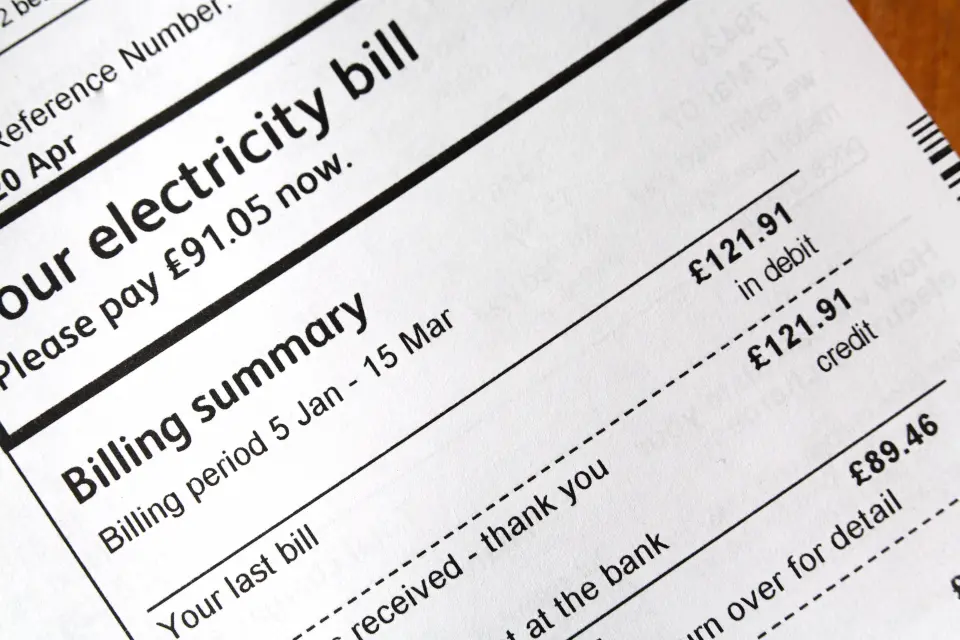
It is also worth paying attention to how you pay. Direct debit remains the cheapest payment method, which is why the headline cap figure is quoted for direct debit customers. Prepayment meters, by contrast, are typically more expensive. If you have recently moved into a home with a prepayment meter, exploring whether it can be switched to a credit meter on direct debit can unlock savings before you even look at tariffs. And while the largest, best-known suppliers dominate the market, smaller suppliers have consistently rated higher for customer satisfaction, so the safe-sounding option is not always the one that serves you best.
Small changes that move the meter
Beyond the tariff, there is a layer of practical, low-cost changes that reduce the amount of energy a home actually uses, which is the part of the bill the cap does not touch. Adjusting your boiler's flow temperature, typically to somewhere between 50 and 70°C depending on the season, can improve efficiency without any loss of comfort in a well-set-up system. Bleeding radiators so they heat evenly, draught-proofing around doors and windows, washing clothes at lower temperatures, and minimising tumble dryer use all chip away at consumption. None of these is dramatic on its own, but together they compound, and unlike a tariff switch, they keep working every year you stay in the home.
There is a natural hierarchy here worth keeping in mind. The cheapest energy is the energy you never use, so efficiency measures come first. Next comes paying the lowest possible rate for what you do use, which is the tariff decision. And underpinning both is the building itself, the single biggest lever, and the one that is set at the moment of purchase.
Bringing it back to the property decision
This is the thread that runs through everything above. The price cap sets the rate. Your tariff choice adjusts what you pay against that rate. Efficiency habits trim your consumption at the margins. But the largest determinant of your energy bill, by a wide margin, is the home you chose in the first place, and that is a decision most people make with almost no visibility into its long-term cost.
We think that is the wrong way round. Energy is not a post-completion chore to sort out once the boxes are unpacked; it is one of the defining running costs of a property, and it deserves to sit alongside price, location, and condition when you are weighing up a home. A slightly more expensive house that is genuinely efficient can be cheaper to live in than a bargain that leaks heat through every wall. The mortgage payment gets all the attention because it arrives as a single, unmissable number each month. The energy bill deserves the same scrutiny, because over the years it can rival it.
The good news is that this is knowable in advance. The building's energy characteristics, the local factors that affect how a home performs, and the running costs you can reasonably expect are all things that can be understood before you commit, rather than discovered afterwards. That shift, from reacting to your energy bill to anticipating it as part of the property decision, is exactly the kind of smarter home-buying we are building Planna to support.
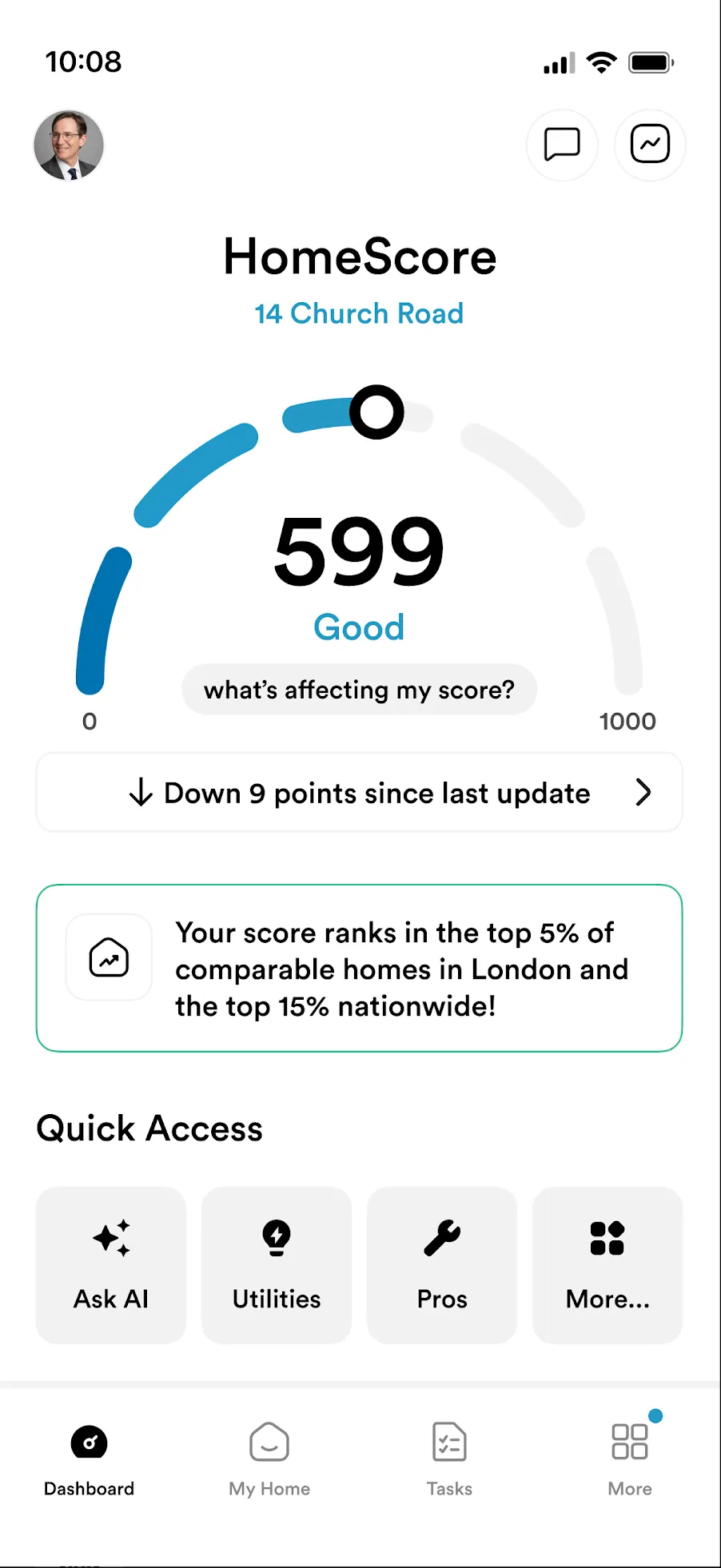
And the work does not stop once you have the keys. This is where HomeScore comes in. Rather than leaving you to guess at what will actually move the needle, HomeScore looks at your specific property and sets tailored monthly tasks built around your goals, whether that is cutting your bills, living more greenly, or simply staying ahead of maintenance before small problems become expensive ones. The efficiency measures we mentioned earlier, the boiler flow temperature, the draught-proofing, the radiators that need bleeding, stop being a vague list of good intentions and become a clear, prioritised plan tied to the home you actually own. It turns looking after your home from something you react to when a bill lands into something you stay on top of month by month, so the running costs you assessed at the point of purchase do not quietly creep back up through neglect.
The cap will keep moving, tariffs will keep changing, and there will always be a switch worth making and a habit worth adopting. But the most powerful energy decision you will ever make is choosing the right home to begin with. Get that right, and every bill that follows starts from a better place.
Energy figures in this article reflect the Ofgem price cap for the period to 31 December 2026 and market data as reported in September 2026. The price cap limits unit rates and standing charges, not total bills; your actual costs depend on your home's energy use. Always compare current deals before switching.