


Why More Homes for Sale Now Come With Panels and What It Means for Buyers and Sellers
Agents will have noticed it on viewings and in listing photos: a steady increase in the number of homes coming to market with solar panels already on the roof. It is not a trick of perception. Britain is in the middle of a rooftop solar boom, and the timing is no accident. As households brace for yet another rise in energy bills this winter, solar has quietly shifted from a niche eco-statement to a mainstream household decision, one that increasingly shapes how a property is marketed and how buyers weigh it up.
Another winter, another bill rise
The context for all of this is an energy market that still refuses to settle. On 26 August, regulator Ofgem confirmed that its quarterly energy price cap will rise by 4% for the period from 1 October to 31 December 2026. For a typical household paying by direct debit for both gas and electricity, that lifts the annual bill from £1,663 to £1,723 which is an increase of about £60 a year, or roughly £5 a month.
The cap is not a limit on any single bill; it caps the maximum suppliers can charge per unit of energy and the daily standing charge for those on default tariffs. It protects around 22 million households, while the roughly 11 million homes on fixed deals are unaffected by this particular change. Ofgem attributed the increase largely to higher wholesale gas prices, driven by continued volatility in global markets.
A couple of points are worth flagging for anyone comparing this figure with earlier ones. From July 2026, Ofgem updated its assumptions about how much energy a typical household uses — the so-called Typical Domestic Consumption Values — to reflect the fact that people are now using meaningfully less gas and electricity than a few years ago. The removal of VAT from domestic electricity bills from 1 October also feeds into the headline number. The upshot is that the £1,723 figure is not perfectly comparable, pound for pound, with caps set earlier in the crisis. But the direction of travel is the one households feel most keenly: bills are going up again, just as the heating goes back on.
That is the backdrop against which more and more homeowners are deciding to take matters into their own hands.
The numbers behind the boom
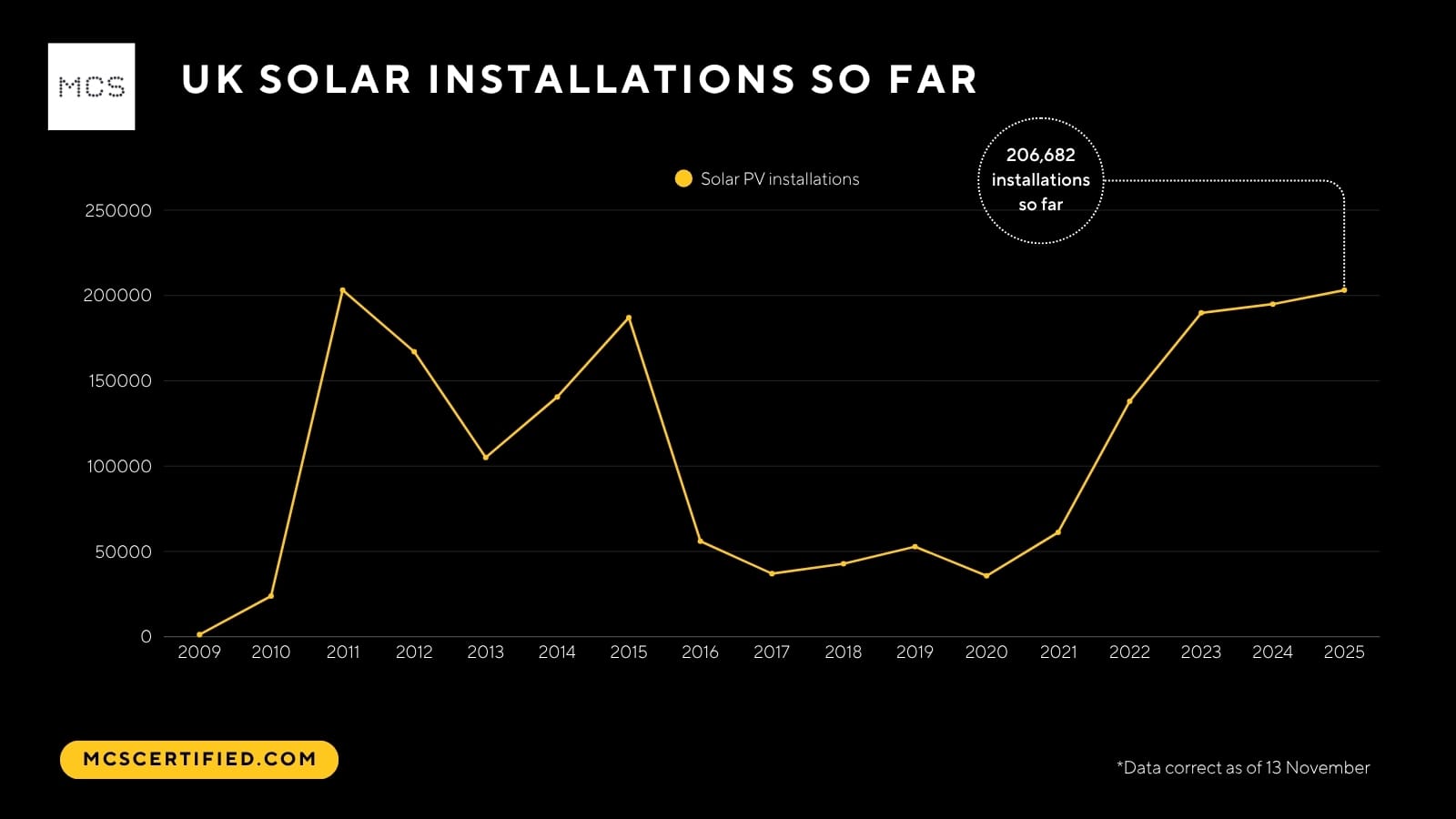
Fresh analysis of solar PV installation data by energy consultancy Glow Green puts some hard figures on the trend. According to the firm, annual installations rose from 53,044 in 2019 - before the energy crisis took hold - to 269,176 in 2025. That is a rise of around 407% in six years.
Crucially, demand has not tailed off now that the worst of the crisis has passed. Glow Green recorded 191,997 solar PV installations between January and August 2026 alone. Within that, March was the strongest month of the year so far, with 28,853 installations, followed closely by June with 28,096. In other words, a market that might have been expected to cool once headline energy prices came down off their 2022 peak has instead kept running hot.
That picture is backed up by the industry's own certification body. The Microgeneration Certification Scheme (MCS), which tracks small-scale renewable installations across the UK, has confirmed that 2025 was a record year for rooftop solar — comfortably beating the previous annual high set back in 2011 during the Feed-in Tariff era, and pushing the cumulative total of certified solar installations past the 1.85 million mark. Exact full-year totals vary a little between data cuts as late certifications are logged, but every independent source tells the same story: this is the busiest the domestic solar market has ever been. By spring 2026, total UK solar capacity across all project sizes had reached somewhere in the region of 22 gigawatts, and solar generated roughly 6% of the country's electricity in 2025.
For a technology that spent a decade being treated as a fringe purchase, that is a remarkable shift in scale.
From green gesture to practical hedge
Why the sustained demand? Glow Green's own explanation cuts to the heart of it. A spokesperson for the firm noted that the latest price cap announcement is a reminder that household energy costs are still being shaped by forces "well beyond the control of individual consumers." Even with prices below their crisis-era peak, many households simply do not know what they will be paying from one winter to the next.
That uncertainty, the firm argues, is precisely why solar has changed character in the public mind. It has moved from being seen as a purely environmental upgrade to a much more practical household decision. Homeowners are increasingly drawn to solar because they want greater control over their energy use and more protection from future bill shocks — a hedge, in effect, against a market they cannot predict.
What makes the trend especially telling is that it has outlasted the immediate emergency. The consultancy points out that continued demand well beyond the peak of the crisis suggests households are not merely reacting to short-term price spikes. They are thinking harder about energy security, long-term running costs and how resilient their homes are to whatever the market does next. With bills rising again from October, the firm expects still more households to look seriously at reducing their exposure to future price changes while being candid that solar "will not be right for every property."
That last caveat matters, and we will come back to it. But the broader psychological shift — from "nice to have" to "sensible insurance" — is the single most important thing driving these numbers.
Where the panels are going up
The geography of the boom is revealing. The leading areas for new installations are largely rural, coastal and semi-rural authorities. In MCS's 2025 figures, Somerset and Cornwall topped the table, followed by the likes of North Yorkshire, County Durham and Wiltshire.
The reasons are practical rather than mysterious. Homeowners in these areas are more likely to live in owner-occupied houses with suitable, unobstructed roof space and the freedom to make structural changes — and less likely to face the barriers that come with flats, shared roofs, conservation restrictions or the densely built-up terraces typical of city centres. If you own the roof and the roof gets sun, the decision is a great deal simpler.
For estate agents, that pattern is worth internalising. In the regions where solar adoption is highest, panels are fast becoming an expected feature rather than a surprising one, and their absence may increasingly prompt a question from energy-conscious buyers.
The new-build accelerant
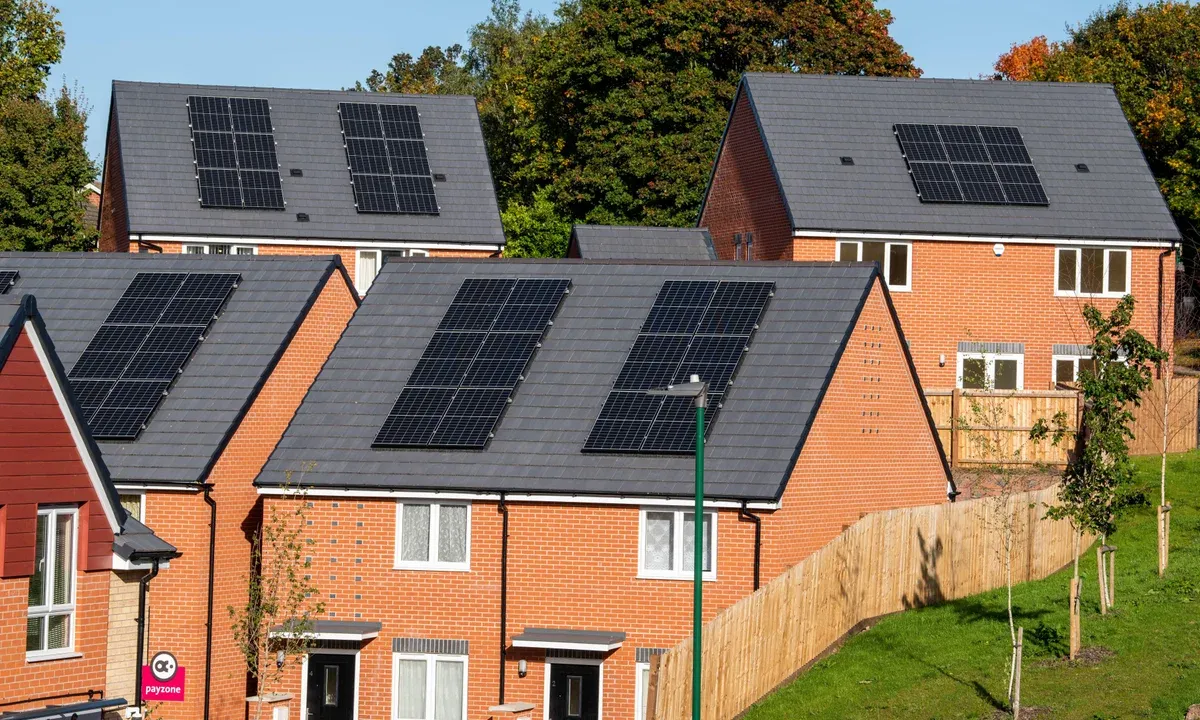
Alongside retrofits on existing homes, a second engine is quietly reshaping the market: new-build housing. MCS has singled out solar on new-build properties as one of the key drivers of recent growth. Since it began recording building type in late 2023, roughly a third of all certified rooftop solar installations have been on new builds — and that share rose to around 35% in 2025.
The policy backdrop here is significant. The government's forthcoming Future Homes Standard is set to require the vast majority of new homes in England to be fitted with solar from the point of construction, with the change expected to bite from 2027. In practice, that means a large and growing slice of the housing stock will arrive on the market solar-ready by default. Over time, this will steadily shift the baseline of what buyers expect — and could subtly reframe older homes without panels as candidates for an upgrade rather than the norm.
Does the maths actually work?
For all the talk of energy security, most homeowners still make the decision on cost. So it is worth being clear-eyed about the economics as they stand in 2026 and about how much they vary from home to home.
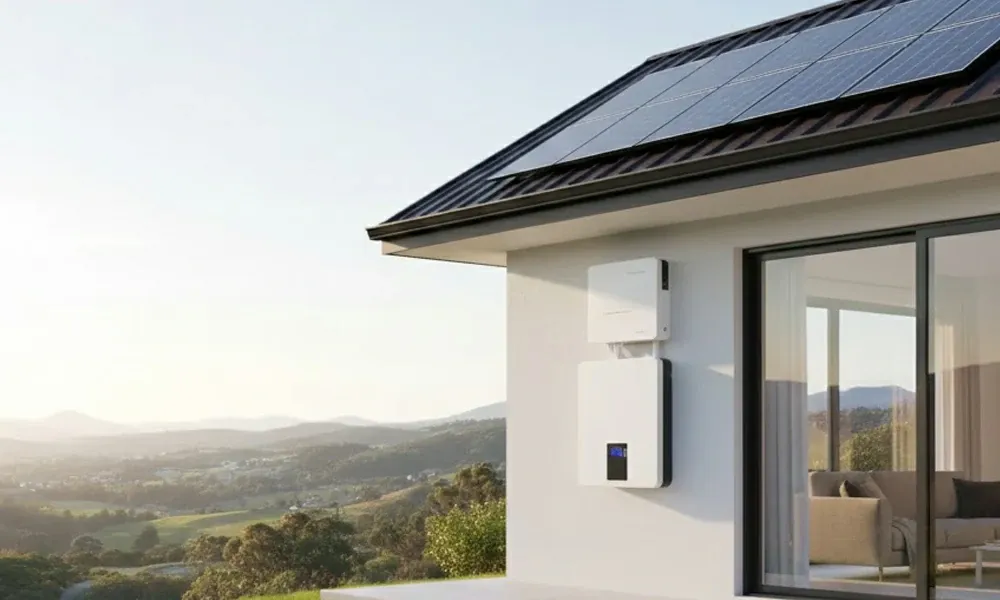
Installed prices have fallen sharply over the past decade. A typical domestic system commonly in the 3kW to 6kW range now costs somewhere in the region of £5,000 to £9,000 fully fitted, depending on size, roof complexity and whether battery storage is included. Adding a battery pushes the total up but substantially increases the share of your own generation you actually use, rather than exporting it cheaply and buying pricier power back in the evening.
Two features tilt the sums in the homeowner's favour right now:
- 0% VAT. Solar panels and battery storage currently qualify for zero-rated VAT on energy-saving materials, a relief scheduled to run until 31 March 2027. On a typical installation that is worth a meaningful sum against the standard 20% rate.
- The Smart Export Guarantee (SEG). Larger licensed suppliers are required to pay households for surplus electricity exported to the grid. Rates vary considerably — the best fixed export tariffs have sat around the mid-teens in pence per kilowatt-hour, while some variable rates are far lower — so it pays to shop around. Eligibility depends on using an MCS-certified installer and having a suitable smart meter, which is one reason certification has become the market's default quality mark.
As for returns, most current estimates put the payback period for a typical UK home somewhere in the range of roughly seven to eleven years, with well-placed systems, disciplined daytime usage or the addition of a battery shortening that further. On annual savings, the Energy Saving Trust has estimated figures in the region of several hundred pounds a year for a typical household, though the real number swings widely with roof orientation, shading, how much electricity you use during daylight hours, and whether you have storage. Panels are typically warrantied for around 25 years, while inverters usually need replacing once during that lifetime — a cost worth factoring in.
The honest summary is this: for a suitable, sun-facing, owner-occupied home where the occupants use a fair amount of power during the day, solar in 2026 stacks up better than it has in years. For a north-facing, heavily shaded or flat-roofed property, or one where the household is out all day and has no battery, the case is far weaker. Blanket claims in either direction should be treated with caution.
What it means for the property market
For buyers and sellers, the rise of rooftop solar introduces a new variable into the transaction and agents are increasingly expected to speak to with some fluency.
On the seller's side, existing panels can be a genuine marketing asset, particularly in the rural and coastal areas where adoption is highest and where buyers are most likely to ask. Lower running costs and a stronger energy performance rating are tangible selling points at a time when households are acutely bill-conscious. The practical details matter, though: whether the system is owned outright or subject to any legacy lease arrangement, whether it comes with battery storage, what export tariff is in place, and whether the installation was carried out by a certified installer with the paperwork to prove it. Buyers and their conveyancers will increasingly want to see that documentation.
On the buyer's side, a home without panels is not a problem so much as an opportunity, provided the roof is suitable. With installation costs down, VAT relief still available and bills heading up again, the retrofit case is stronger than it was even a couple of years ago. The key questions are the familiar ones: roof orientation and pitch, shading, roof condition and age, and the household's own daytime energy habits.
The bottom line
The surge in domestic solar is one of the clearer signals of how the energy crisis has reshaped household behaviour for the long term. A more than fourfold rise in annual installations since 2019, sustained demand well past the crisis peak, a record-breaking 2025 and a strong 2026 to date all point the same way. The latest price cap rise is unlikely to reverse the trend, if anything, another winter of uncertainty tends to push more homeowners towards the one part of their energy bill they can actually influence.
Solar will not suit every home, and the economics reward careful, property-specific analysis rather than sweeping promises. But for suitable roofs, it has become one of the most effective ways for a household to make its energy costs more predictable and, increasingly, a feature that both buyers and sellers expect to find on the market.