


If you've been waiting for the balance of power to shift in your favour, July 2026 is what that looks like. Estate agents are reporting more homes on the market than at any point in the last decade. Asking prices are falling and sellers are increasingly willing to negotiate.
The catch? Most buyers don't know how to use this leverage. They see a price reduction and assume the discount has already been done. They offer close to asking. And they leave thousands on the table.
Here's how to negotiate properly in this market and the single most powerful lever almost nobody uses.
What the Market Actually Looks Like Right Now
Let's start with facts:
- Supply is at a decade high. More homes are competing for fewer buyers than at any point in the last ten years.
- A third of listed homes have already been reduced. On average, by around 7% off the asking price.
- Asking prices are falling month-on-month. June saw a 0.6% drop - unusual for a month that normally sees modest rises.
- Mortgage approvals are down. May 2026 figures showed an 11% year-on-year drop, meaning fewer buyers are in the market.
- Interest rates have eased slightly. After spiking in spring, mortgage rates have drifted back to the high-4s, and the Bank of England base rate has held steady at 3.75%.
- Forecasters are split but cautious. Savills expects prices to fall around 2% by year-end; Knight Frank is predicting modest growth of 1.5%. Nobody is predicting a boom.
Translation: Sellers need you more than you need any single house. Every negotiation should start from that fact.
The Mindset Shift: Asking Price Is an Opening Position, Not a Floor
In a hot market, the asking price is the floor. Buyers negotiate upwards from there.
In this market, the asking price is an opening bid — often a stale one, set months ago when conditions were more optimistic.
Before you even arrange a viewing, ask (or check with the agent) three things:
How long has it been listed? Anything over 8–10 weeks in the current market is a yellow flag. It suggests the home is overpriced, has an issue, or both. Length of time on market is more telling than asking price.
Has it already been reduced? A price cut isn't the end of the discounting; it's evidence the seller is motivated and their expectations are already shifting. Homes that cut once often cut again.
Has a sale fallen through? Ask the agent directly. If a previous buyer withdrew after a survey, you need to know what they discovered. The agent is legally obliged to disclose known material issues when asked.
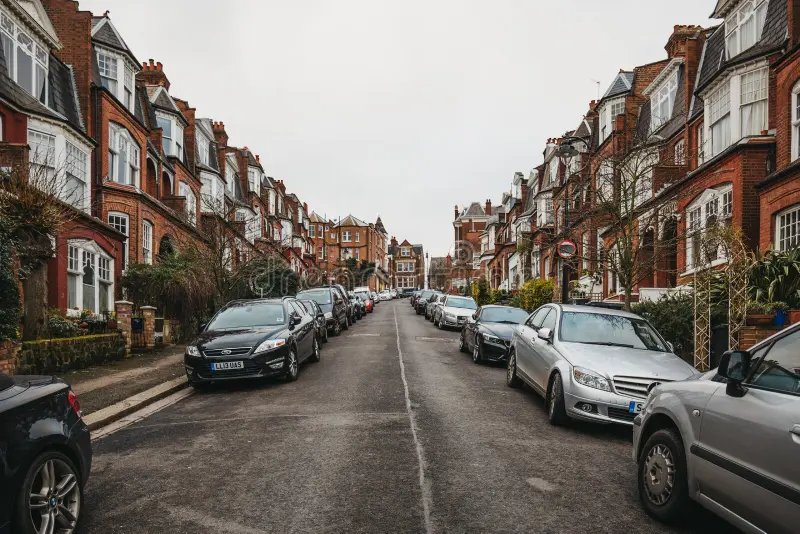
The Most Powerful Negotiating Lever Nobody Uses: Property Condition
Here's what most "how to negotiate" guides miss: general market conditions get you to a fair price, but specific evidence about the property gets you below it.
A vague "the market's slow, will you take 5% less?" is easy for a seller to dismiss. A specific, evidenced offer like "the roof has £7,000 of repairs needed, here's the assessment, so our offer reflects that" is much harder to argue with. The seller knows the next buyer's surveyor will find the same thing.
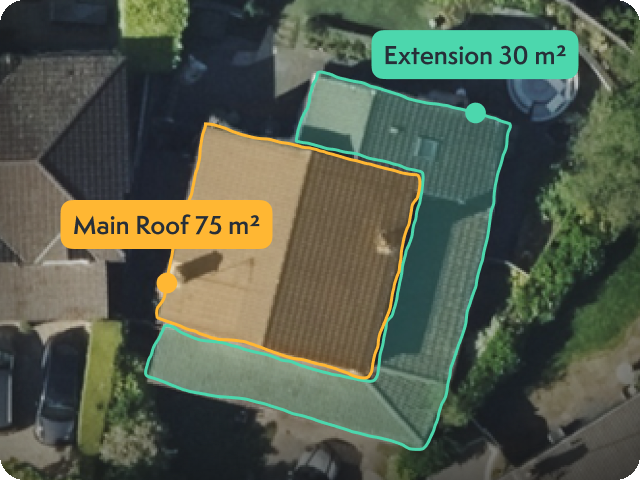
Checking a roof's condition usually costs hundreds of pounds — and arranging an inspection on a property that isn't yours yet can be awkward. That's why Planna built Roof Genius, a mini app in our toolkit that lets you check any roof's condition in minutes.
In a buyer's market, this compounds. Sellers who've already waited months dread the deal collapsing at survey stage. Presenting condition evidence with your offer (rather than springing it after the survey) signals you're a serious, informed buyer whose offer won't unravel later.
Building Your Condition Evidence Before You Offer
Start with HomeScore. Before you've even viewed the property, use HomeScore to assess its Safety, Condition, and Energy standing across 1,000 data points. You'll get a clear picture of where the weaknesses are likely to be - damp risk, structural vulnerability, energy inefficiency, so you know exactly what to probe during a viewing
Read the EPC properly. An Energy Performance Certificate with a poor rating means quantifiable running costs and bills for improvement work. "This is an E-rated property; bringing it to a C costs £X" isn't a vague complaint, it's a concrete number to deduct from your offer.
Hunt during the viewing. Damp smells, fresh paint on a single wall, cracks around openings, sticking doors, an ancient boiler, a fuse box from the 1980s, each is a line item for your offer.
Check the neighbourhood. Use Planna's Area Guide to understand local safety, schools, amenities, and trends. If the area has lower-than-average safety scores or declining catchment schools, that's data you can reference too. Neighbourhood quality or lack of it directly affects resale value.
The Negotiation Playbook: Step by Step
1. Set Your Ceiling Before You Fall in Love
Decide your maximum offer based on sold prices (not asking prices) for genuinely comparable homes in the last 3–6 months.
2. Open Meaningfully Below Asking
In the current market, opening 5–10% below asking on a property that's been listed a while isn't cheeky, it's rational. A third of sellers have effectively conceded that much already. Anchor low, with reasons.
3. Justify Every Pound
Structure your offer as a calculation, not a number:
- Recent comparable sold prices
- Minus specific condition deductions (roof, energy, damp, etc.)
- Minus a market-risk margin
Sellers reject numbers easily. They find it much harder to reject reasoning.
4. Sell Your Position, Not Just Your Price
What are you offering beyond money?
- No chain?
- Mortgage in principle already agreed?
- Flexible on completion dates?
- Cash buyer?
In a nervous market, certainty is worth thousands. A proceedable buyer at £258,000 frequently beats a chained buyer at £265,000. Say this explicitly.
5. Let Silence Work
Time is on your side, not the seller's. If they reject your offer, thank them, restate that it remains open, and walk away. A meaningful proportion of "final" rejections turn into acceptance calls two or three weeks later.
6. Renegotiate at Survey If (and Only If) You Find Something New
If your survey uncovers issues you hadn't priced in, going back with a revised figure is standard practice, not sharp practice. But don't chip the price on things you already knew about. That's how deals and goodwill collapse.
What Not to Do
Don't skip the survey because "the price is already low." A discount doesn't fix a defective roof. In fact, heavily reduced homes are more likely to have condition issues, that's often why they haven't sold.
Don't try to time the exact bottom. If prices drift another 1–2% but you've negotiated 7–10% off with condition evidence, you're already ahead. You can't buy the bottom retrospectively.
Don't insult; evidence instead. There's a difference between a low offer with a rationale and a lowball with attitude. The first gets countered. The second gets you written off by the agent for every future listing.
Don't forget the whole budget. A great negotiation on price can be undone by un-budgeted costs. Factor in survey fees, legal costs, stamp duty, and likely repairs.
The Bottom Line
The 2026 market hands buyers three advantages at once: abundant choice, motivated sellers, and falling asking prices. But the buyers who'll look back on this as a great time to have bought won't be the ones who simply offered asking on an already-reduced home.
They'll be the ones who:
- Did their condition homework upfront
- Attached evidence to every offer
- Negotiated from information, not hope
- Understood their neighbourhood
- Presented themselves as certain, proceedable buyers
The market gives you the leverage. Knowing exactly what's wrong with the house - and what the neighbourhood offers - is how you use it.
Before your next viewing: Utilise our HomeScore report to understand the property's information, energy rating and running costs. Check the Neighbourhood Guide to see local schools, safety, and amenities.