


If you've noticed more rooftops in your neighbourhood sporting solar panels lately, you're not imagining it. Rising energy bills, falling installation costs, and a growing list of government incentives have pushed solar firmly into the mainstream for UK homeowners. But with so much information out there, it can be hard to know where to start. This guide walks through everything from how solar panels actually work to whether your home is a good fit, what it'll cost, and what to expect from the installation process.
How do solar panels work?
At a basic level, solar panels capture energy from sunlight and turn it into something you can use in your home - either electricity or heat. There are two main types, and it's worth understanding the difference before you go any further.
Photovoltaic (PV) panels
These are the panels most people picture when they think "solar" - the dark, rectangular modules you see on rooftops across the country. PV panels generate electricity directly from sunlight using the photovoltaic effect.
Each panel is made up of cells containing layers of semiconductor material, almost always silicon, which has been specially treated so that it releases electrons when sunlight hits it. This creates a flow of direct current (DC) electricity. Since UK homes run on alternating current (AC), an inverter converts the DC output from your panels into AC electricity that can power your appliances or be exported to the grid.
Solar thermal panels
Solar thermal works differently. Rather than generating electricity, these panels capture heat from the sun and use it to warm a fluid — typically water mixed with antifreeze — circulated through a heat exchanger to provide hot water for your taps and showers, and in some larger systems, space heating too.
In the UK, a well-installed solar thermal system can realistically cover a good portion of your hot water needs during spring, summer and early autumn, though it's less effective for space heating, which demands more consistent output than thermal panels typically provide in winter.
Which type is right for you?
For the vast majority of UK homeowners, photovoltaic (PV) is the more relevant choice - it's the technology behind the boom in domestic solar installations, and it's what most of this guide focuses on from here. Solar thermal can still make sense in specific situations, particularly where hot water usage is high and roof space allows for both technologies.
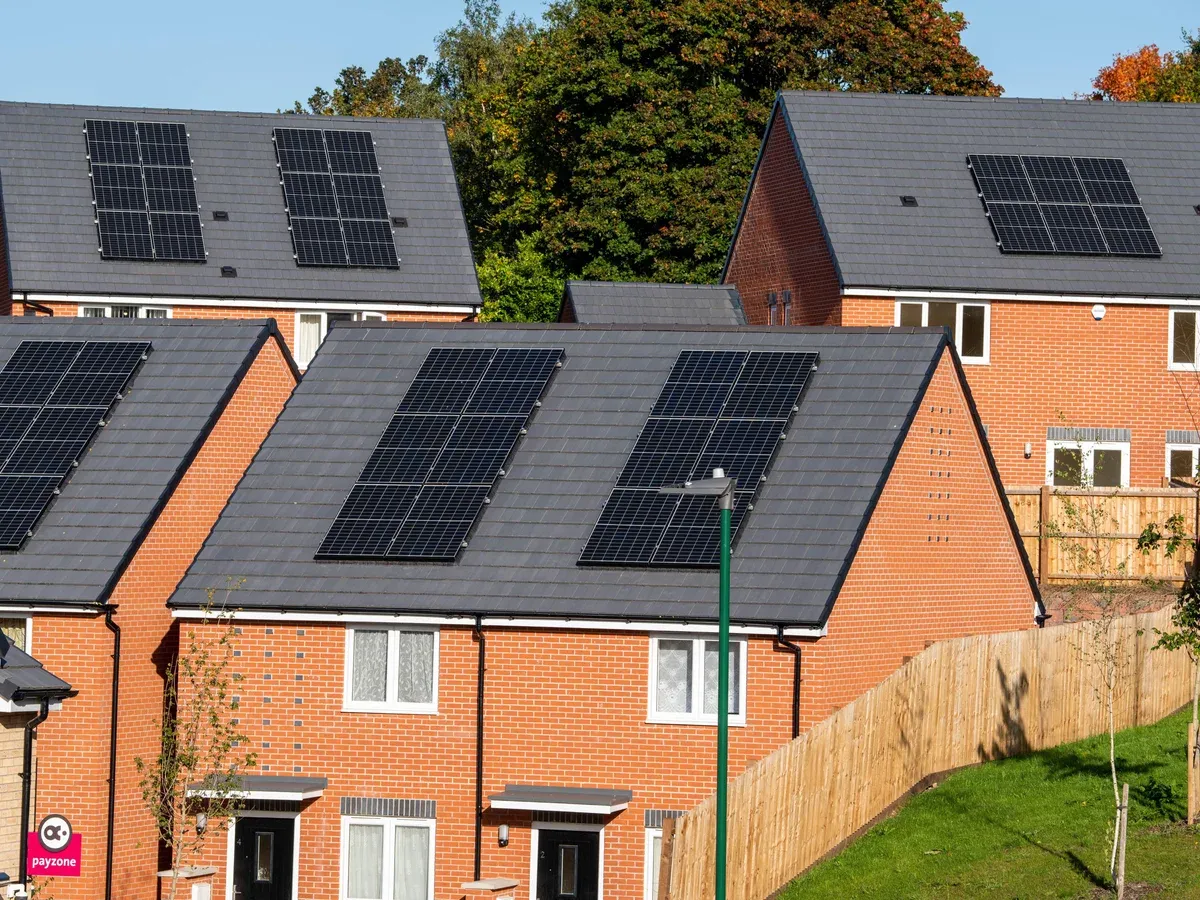
Is your home suitable for solar panels?
A few factors determine how well solar will work on your property, and how big a system makes sense.
Roof space
As a rough guide, you'll need around 15-20m² of usable roof space for a system around 3.5kWp — roughly 8-14 panels depending on wattage. This covers many UK households' needs, though larger homes or those with EVs or heat pumps may benefit from a bigger array if space allows. Domestic panels typically range from 300W to 500W+, with higher-wattage panels costing more but needing less roof space for the same output.
Orientation
South-facing roofs generate the most electricity, but you don't need a perfect south aspect. Panels facing anywhere from east to west via south can still generate a useful amount, with east- or west-facing systems producing somewhat less than south-facing — often still enough for excellent returns when sized correctly.
Shade
Shade is one of the biggest factors affecting actual output, and even partial shading from trees, chimneys, or neighbouring buildings can meaningfully reduce generation. Modern panels include bypass circuits so shade on one section doesn't take down the whole system, but if large parts of your roof are shaded for long periods, get a proper shading assessment before committing to a layout. Where shade is unavoidable, micro-inverters or power optimisers let each panel operate more independently, limiting the impact of shaded panels on the rest of the array.
Roof pitch
A pitch of 30°-40° gives the best results in the UK, bringing panels closer to perpendicular with the sun's rays for more of the year. Flatter or steeper roofs aren't a dealbreaker, installers can usually adjust the mounting frame to optimise the angle, though this may add slightly to the cost.
Planning permission
For most homes, solar panels fall under permitted development rights, so you won't need to apply for planning permission. The main exception is panels that protrude more than 200mm beyond the roof plane — anything beyond this, or installations on listed buildings or in conservation areas, may require a formal application.
Building regulations and grid connection
Even where planning permission isn't required, your installation must comply with UK building regulations covering structural safety, electrical safety, and grid connection. Any grid-connected system must be registered with your local Distribution Network Operator (DNO) — though in practice, a good installer handles this as part of the project.
How much do solar panels cost in the UK?
Cost is usually the first question on everyone's mind - solar is a significant investment, even if it pays for itself over time.
Solar panels without a battery
For a standard PV system without battery storage, expect to budget somewhere in the region of £5,000 to £10,000, depending on system size, your roof's accessibility, and local market rates. A typical 3.5kWp system without a battery often comes in around the £6,000 mark.
The overall cost generally covers:
- The solar panels themselves
- The inverter
- Mounting equipment and wiring
- Scaffolding (if required)
- Installation labour and final testing
Properties with awkward roof access, multiple roof faces, or particularly tall buildings may need more extensive scaffolding, which can push costs toward the higher end of the range.
Adding battery storage
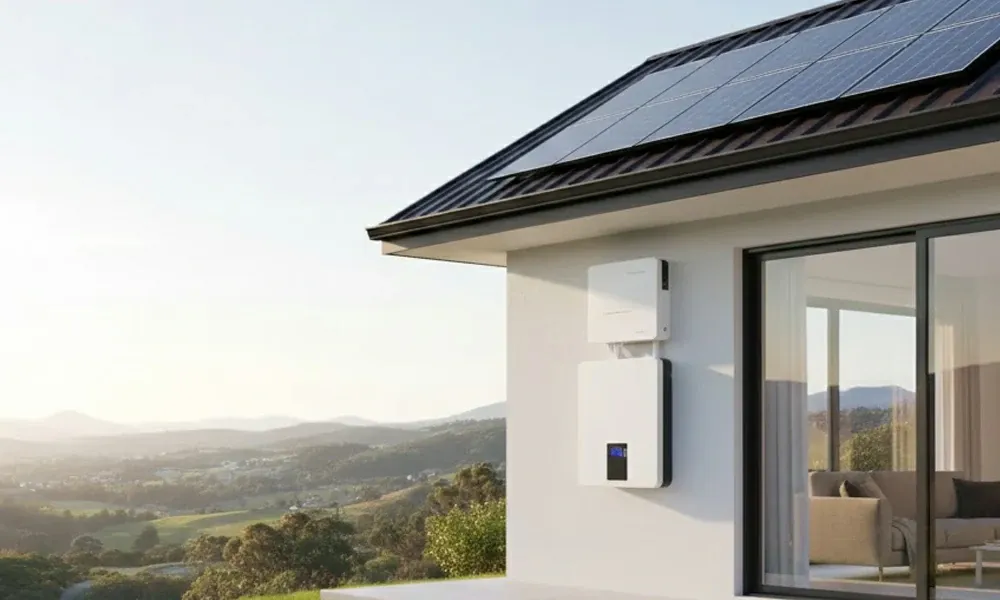
Battery storage has become one of the fastest-growing areas of the UK solar market. Without a battery, surplus electricity is exported to the grid at a relatively low rate. With one, you can store daytime surplus and use it in the evening when demand is highest.
Typical 2026 costs: a compact 5kWh battery (suitable for a three-bedroom home) runs around £3,500-£4,500 installed, a larger 9.5-10kWh system £5,500-£8,000, and premium options £7,500+. Combined solar-and-battery systems typically cost £8,000-£14,000+, but installing both together usually saves £500-£1,500 compared with retrofitting a battery later, since you avoid duplicating labour and scaffolding.
Since February 2024, 0% VAT applies to both solar panels and battery storage in the UK, knocking £1,000-£2,000 off a combined installation — a saving that remains in place at the time of writing.
Payback, savings, and the Smart Export Guarantee
For most UK homeowners, the average payback period sits around 5-7 years. Adding a battery improves how much generated electricity you actually use — without one, households typically use 30-50% of generation (the rest exported); with one, that can rise to 60-80%. At current grid rates of roughly 24-30p/kWh, this can meaningfully cut annual bills, with combined solar-and-battery systems reportedly saving households an average of several hundred pounds a year and lifetime savings running into the tens of thousands.
Any surplus you export can also earn money through the Smart Export Guarantee (SEG), which requires licensed suppliers to pay for exported solar electricity at rates typically ranging from around 3p to 15p per kWh — worth shopping around for.
Ongoing maintenance costs
Solar systems are relatively low-maintenance compared to other renewable technologies. Panels typically carry a 25-year warranty and often continue performing well beyond that timeframe. By the time this replacement is due, inverter technology will likely be more efficient and competitively priced than today's options.
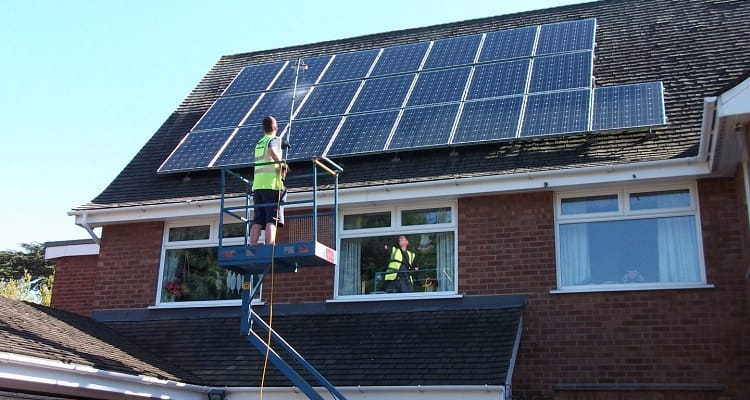
Beyond that, occasional cleaning to remove dirt, debris, or bird droppings, and keeping an eye on nearby trees that might start casting shade as they grow, are about the extent of routine upkeep.
How efficient are solar panels?
Efficiency refers to the percentage of sunlight a panel can convert into usable electricity. As of 2026, most residential panels on the market sit in the 20-22% efficiency range, with premium models from leading manufacturers now reaching 24-25% - up from around 20-21% just five years ago.
Panel types explained
If you start comparing quotes, you'll come across a few different panel technologies. Monocrystalline panels are currently the most popular choice for UK homes — made from a single, pure silicon crystal, offering efficiency ratings typically in the 19-23% range and performing well even in lower light, with a uniform black appearance that's popular aesthetically. Polycrystalline panels are made from multiple silicon crystals melted together, giving a blue, speckled look; generally less efficient but more budget-friendly. PERC monocrystalline panels capture reflected light from the rear of the cell, typically boosting efficiency to 18-21% — a solid middle-ground for homes with moderate roof space. Thin-film panels are lightweight and flexible, better suited to commercial buildings that can't support heavier panels, and rarely the right choice for a typical UK home. Hybrid panels combine PV electricity generation with solar thermal in one unit, producing both electricity and hot water — versatile, but at a higher price point.
What does this mean for your home?
A well-sited solar PV system in the UK can realistically cover somewhere between 40-70% of a household's annual electricity demand, with the exact figure depending on system size, roof orientation, local sunlight levels, and how well your usage patterns align with generation (i.e. how much you use during daylight hours versus the evening).
It's worth remembering that efficiency is only one part of the picture. If you have plenty of unshaded, south-facing roof space, a slightly less efficient panel simply means installing one or two more panels to hit the same output — often a more cost-effective approach than paying a premium for the very latest technology. Higher efficiency becomes more valuable when roof space is limited, shaded, or oddly shaped, since it lets you extract more electricity from a smaller area.
How are solar panels installed?
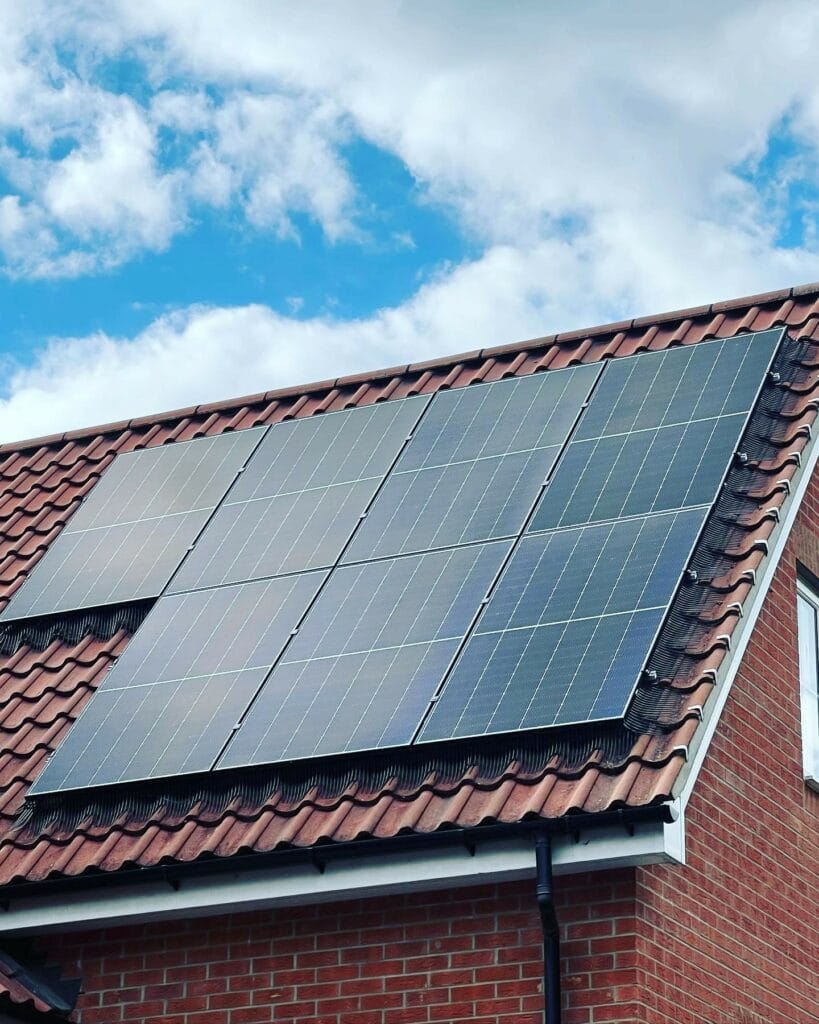
Once you've decided to go ahead, the process generally follows: a site assessment (an installer surveys orientation, pitch, shading, and structural condition, and proposes a layout based on your usage); choosing a supplier and finalising the system, including size, panel type, battery, and cabling placement; planning and grid registration, usually automatic under permitted development, with DNO registration handled by your installer; scaffolding and mounting, with brackets fitted to withstand UK weather; panel installation and wiring through to the inverter and battery; and finally connection and testing, where the system is wired into your consumer unit and checked for safety.
Depending on size and complexity, on-site installation takes anywhere from a day to about a week, after which scaffolding is removed and you're left with a fully operational system.
Choosing an installer
Always check that your installer is MCS-accredited (Microgeneration Certification Scheme), and that the panels and installation meet relevant BS EN and MCS standards. This isn't just a quality marker - MCS accreditation is often a requirement for eligibility for grants, incentives, and the Smart Export Guarantee.
It's also worth asking about monitoring. Many modern systems include real-time monitoring that tracks energy production, voltage levels, and panel temperature, alerting you if performance drops or an issue arises. Some systems also include arc fault detection, which can automatically shut down part of the system if it detects a dangerous electrical fault - an important safety feature worth asking your installer about.
Final thoughts
Solar panels remain one of the more straightforward ways for UK homeowners to cut energy costs, reduce reliance on the grid, and lower their carbon footprint — provided your roof has reasonable space, a workable orientation, and minimal shading. With panel efficiency improving year on year, battery storage becoming more affordable, and incentives like 0% VAT and the SEG still in place, the economics continue to move in homeowners' favour.
Whether you're ready to get quotes now or just starting to explore your options, understanding these fundamentals - suitability, costs, efficiency, and installation - puts you in a much stronger position to make a decision that's right for your home.
Not sure where to start with energy improvements? Planna's HomeScore gives your home an Energy rating and shows which upgrades are likely to make the biggest difference.


